
Depression is a feeling of sadness, emptiness, or irritability that becomes a disorder when it is intense enough to interfere with functioning.
Heredity, side effects of medications, emotionally distressing events, changes in levels of hormones or other substances in the body, and other factors can contribute to depression.
Depression can make people sad and sluggish and/or lose all interest and pleasure in activities they used to enjoy.
Doctors base the diagnosis on signs and symptoms.
Antidepressant medications, psychotherapy, and sometimes electroconvulsive therapy can help.
(See also Overview of Mood Disorders.)

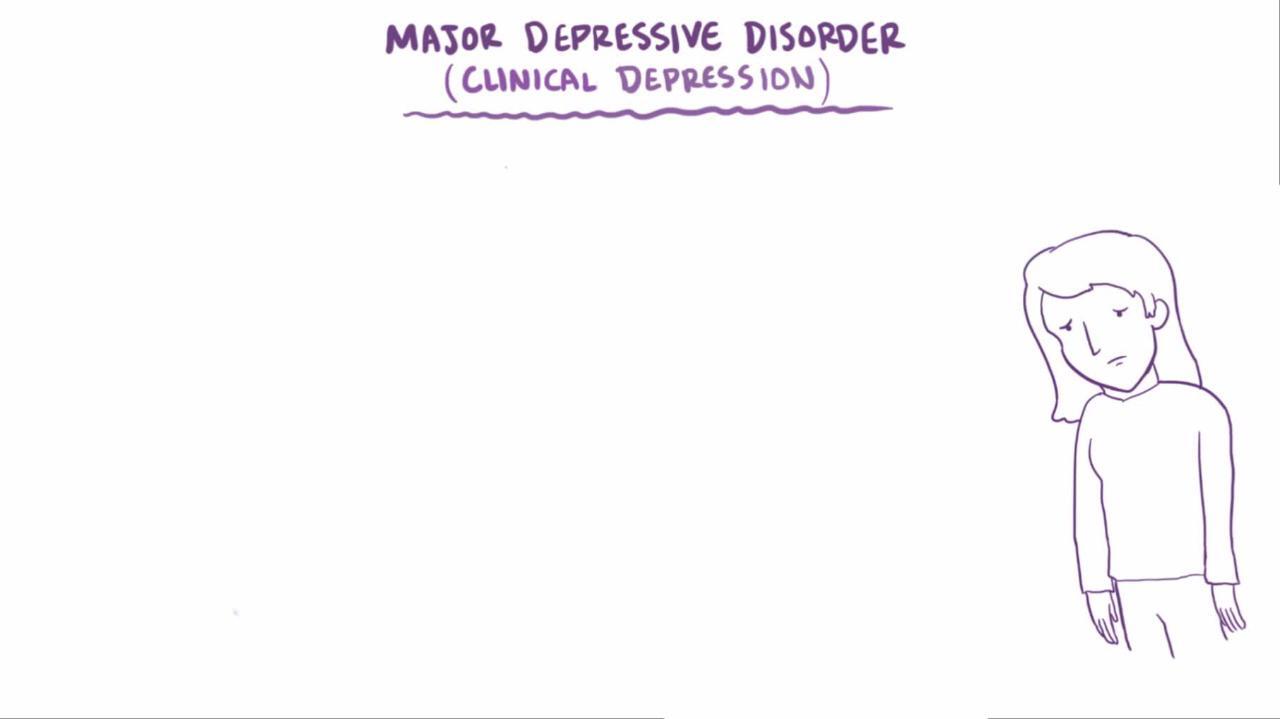
Depression is the second most common mental health disorder (anxiety is the most common). About 13% of people who visit a primary care practitioner meet criteria for a diagnosis of major depression.
Depression typically develops during a person's mid teens, 20s, or 30s, although depression can begin at almost any age, including during childhood (see also Depression and Mood-Regulation Disorders in Children and Adolescents).
An episode of depression, if untreated, typically lasts about 6 months but sometimes lasts for 2 years or more. Episodes tend to recur several times over a lifetime.
People often use the term "depression" to describe the sad or discouraged mood that results from emotionally distressing events, such as a natural disaster, a serious illness, or death of a loved one. People may also say they feel "depressed" at certain times, such as during the holidays (holiday blues) or on the anniversary of a loved one's death. However, such feelings do not usually represent a disorder. Usually, these feelings of grief, demoralization, and disappointment are temporary, lasting days rather than weeks or months, and occur in waves that tend to be tied to thoughts or reminders of the distressing event. Also, these feelings do not substantially interfere with functioning for any length of time.
Spotlight on Aging: Depression
Depression affects many older adults. Some older adults have had depression earlier in their life. Others develop it for the first time during old age. Causes of Depression in Older Adults Some causes of depression may be more common among older adults. For example, older adults may be more likely to experience emotionally distressing events that involve a loss, such as the death of a loved one or a loss of familiar surroundings, as when moving away from a familiar neighborhood. Other sources of stress, such as reduced income, a worsening chronic illness, a gradual loss of independence, or social isolation, may also contribute. Disorders that can lead to depression are common among older adults. Such disorders include cancer, heart attack, heart failure, thyroid disorders, stroke, dementia, and Parkinson disease. Depression Versus Dementia In older adults, depression can cause symptoms that resemble those of dementia: slower thinking, decreased concentration, confusion, and difficulty remembering, rather than the sadness people tend to associate with depression. However, doctors can distinguish depression from dementia because when depression is treated, people with depression regain their mental function. People with dementia do not. Also, people with depression may complain bitterly about their memory loss and rarely forget important current events or personal matters. In contrast, people with dementia often deny memory loss. Diagnosis of Depression in Older Adults Depression is often difficult to diagnose in older adults for several reasons:
Because depression may be difficult to identify, many doctors routinely ask older adults questions about their mood. Family members should be alert for subtle changes in personality, especially lack of enthusiasm and spontaneity, loss of sense of humor, and new forgetfulness. |
Causes of and Risk Factors for Depression
The exact cause of depression is unclear, but a number of factors may make depression more likely. Risk factors include
A family tendency (heredity)
Emotionally distressing events, particularly those involving a loss
Female sex
Certain general medical disorders
Side effects of certain medications
Depression does not reflect a weakness of character or a lack of trying to feel better. Social class, race, and culture do not appear to affect the chance that people will experience depression during their lifetime.

Genetic factors contribute to depression in about one-third to one-half of the people who have it. For example, depression is more common among siblings, parents, and children (particularly in an identical twin) of people with depression. Genetic factors can affect the function of substances that help nerve cells communicate (neurotransmitters). Serotonin, dopamine, norepinephrine, glutamate, and acetylcholine are neurotransmitters that may be involved in depression.
Other factors include the hormone systems that regulate the thyroid, adrenal, and pituitary glands; environmental influences that can activate or deactivate certain genes, such as exposure to repeated childhood trauma; and significant life stressors, such as the loss of a loved one.
Women are more likely than men to experience depression, although the reasons are not entirely clear. Of physical factors, hormones are the ones most involved. Changes in hormone levels can cause mood changes shortly before menstruation (as part of premenstrual syndrome), during pregnancy, after childbirth, and during menopause. Some women become depressed during pregnancy or during the first 4 weeks after giving birth (called baby blues or, if the depression is more serious, postpartum depression). Abnormal thyroid function, which is fairly common among women, may also be a factor.
Transgender and nonbinary people appear to have higher rates of depression than cisgender people.
Mood disorders may also be associated with seasonal changes. For example, many people report feeling sadder in late autumn and winter and blame this tendency on the shortening of daylight hours and colder temperatures. However, in some people, such sadness is severe enough to be considered a type of depression (called seasonal affective disorder).
Depression may occur with or be caused by a number of general medical disorders and factors. These disorders may cause depression directly (as when a thyroid disorder affects hormone levels) or indirectly (as when rheumatoid arthritis causes pain and disability). Often, a disorder both directly and indirectly causes depression. For example, advanced human immunodeficiency virus (HIV) infection may damage the brain and directly cause depression. Less advanced forms of HIV infection may also cause depression indirectly by having an overall negative effect on the person’s life, from diagnosis through advanced infection.
The use of some prescription medications, such as some beta-blockers (used to treat high blood pressure), can cause depression. For unknown reasons, steroids (also called corticosteroids or glucocorticoids) often cause depression when the body produces them in large amounts as part of a disorder (as in Cushing syndrome), but when they are given as a medication, they tend to cause hypomania (a less severe form of mania) or, rarely, mania. Sometimes stopping a medication can cause temporary depression.
A number of mental health disorders can predispose a person to depression. They include certain anxiety disorders, alcohol use disorder, other substance use disorders, and schizophrenia. People who have had depression are more likely to have it again.
Emotionally distressing events, such as loss of a loved one and chronic adversity, such as that caused by bullying, socioeconomic stress, and adverse childhood experiences, can sometimes trigger depression. However, depression is usually seen only in people who are predisposed to the condition, such as those who have family members with depression. Depression may arise or worsen without any apparent or significant life stresses.
Some Causes of Depression
Condition | Examples |
|---|---|
Brain and nervous system disorders | Dementia (in early stages) Seizures that affect the temporal lobe (focal-onset seizures) |
Cancers | Cancer spreading throughout the body (metastatic) |
Connective tissue disorders | Systemic lupus erythematosus (lupus) |
Hormonal disorders | High levels of parathyroid hormone (hyperparathyroidism) Low or high levels of thyroid hormone (hypothyroidism or hyperthyroidism) Low levels of pituitary hormones (hypopituitarism) Low levels of testosterone (hypogonadism) |
Infections | Syphilis (late stage) Viral pneumonia |
Mental health disorders other than mood disorders | Antisocial personality disorder Borderline personality disorder Dementia in the early stages |
Nutritional disorders | Pellagra (vitamin B6 deficiency) Pernicious anemia (a form of vitamin B12 deficiency) |
Other disorders | |
Medications, substances, and illicit drugs | Amphotericin B Beta-blockers (some) Cimetidine Contraceptives (oral) Steroids (sometimes called corticosteroids or glucocorticoids) Cycloserine Hormone (estrogen or progesterone) therapy Interferon Mercury Methyldopa Metoclopramide Reserpine Thallium Vinblastine Vincristine |
Symptoms of Depression
Symptoms of depression typically develop gradually over days or weeks and can vary greatly. For example, a person who is becoming depressed may appear sluggish and sad or irritable and anxious.
Many people with depression cannot experience emotions—including grief, joy, and pleasure—in a normal way. The world may appear to have become colorless and lifeless. They lose interest or pleasure in activities that they used to enjoy.
People with depression may be preoccupied with intense feelings of guilt and self-denigration and may not be able to concentrate. They may experience feelings of despair, loneliness, and worthlessness. They are often indecisive and withdrawn, feel helpless and hopeless, and think about death and suicide.
Most people with depression have difficulty falling asleep and awaken repeatedly, particularly early in the morning. Some people with depression sleep more than usual.
Poor appetite and weight loss may lead to emaciation, and in women, menstrual periods may stop. However, overeating and weight gain are common in people with mild depression.
Some people with depression neglect personal hygiene or even their children, other loved ones, or pets. Some complain of having a physical illness, with various aches and pains.
Major depressive disorder
People with major depressive disorder (formally called unipolar depressive disorder) are depressed most days for at least 2 weeks. Specific symptoms include depressed mood, weight loss or gain, fatigue, sleep disturbances, agitated or slowed movements, feelings of worthlessness or guilt, difficulty thinking, and suicidal ideation or behavior. Their eyes may be full of tears, their brows may be furrowed, and the corners of the mouth may be turned down. They may slump and avoid eye contact. They may hardly move, show little facial expression, and speak in a monotone.
Did You Know...
|
Persistent depressive disorder
People with persistent depressive disorder have been depressed for most of the time for 2 years or more.
Symptoms begin gradually, often during adolescence, and may last for years or decades. These symptoms include depressed mood, fatigue, changes in appetite, sleep disturbances, agitated or slowed movements, low self-esteem, feelings of hopelessness, and difficulty thinking. How many symptoms are present at one time varies, and sometimes symptoms are less severe than those in major depression.
People with this disorder may be gloomy, pessimistic, skeptical, humorless, and hypercritical. Some are passive, lack energy, and keep to themselves. Some constantly complain and are quick to criticize others and reproach themselves. They may be preoccupied with inadequacy, failure, and negative events, sometimes to the point of morbid enjoyment of their own failures.
Premenstrual dysphoric disorder
Severe symptoms occur before most menstrual periods and disappear after they end. Symptoms cause substantial distress and/or greatly interfere with functioning. Symptoms are similar to those of premenstrual syndrome but are more severe, causing great distress and interfering with functioning at work and social interactions.
Premenstrual dysphoric disorder may first appear any time after the first menstrual period. It may worsen as women approach menopause but ends after menopause. It occurs in about 1 to 6% of women who are menstruating.
Women with premenstrual dysphoric disorder have mood swings, suddenly becoming sad and tearful. They are irritable and anger easily. They feel very depressed, hopeless, anxious, and on edge. They may feel overwhelmed or out of control.
As with other types of depression, women with this disorder may lose interest in their usual activities, have difficulty concentrating, and feel tired and without energy. They may eat too much and crave certain foods. They may sleep too little or too much.
Physical symptoms such as joint pain, a bloated feeling, breast tenderness, or weight gain may also be present.
Prolonged grief disorder
Prolonged grief is persistent sadness following the loss of a loved one. It is different from depression in that the sadness relates specifically to the loss rather than the more general feelings of sadness and failure associated with depression.
Prolonged grief is considered present when grief (as shown by persistent longing or yearning and/or preoccupation with the deceased) is long-lasting (at least 12 months), experienced a great deal of the time, and is deeper than what a person's culture considers typical. It also must be accompanied by 3 or more of the following for at least 1 month to a degree that causes distress or disability:
Feeling of identity confusion (for example, feeling that part of oneself has died)
Disbelief about the death
Avoidance of reminders of the loss
Intense emotional pain (for example, pain related to the death)
Difficulty engaging in ongoing life
Feelings of numbness
Feelings of meaninglessness
Intense loneliness
Other disorders and conditions associated with depressive disorders include substance use and increased susceptibility to cancer and cardiovascular disorders.
Substance use
People with depression are more likely to use alcohol or illicit drugs in an attempt to help them sleep or feel less anxious. However, depression leads to alcohol use disorder or other substance use disorders less often than was once thought.
People are also more likely to smoke heavily and to neglect their health. Thus, the risk of developing or worsening other disorders, such as chronic obstructive pulmonary disease, is increased.
Other effects of depression
Depression may reduce the immune system's ability to respond to foreign or dangerous invaders, such as microorganisms or cancer cells. As a result, people with depression may be more likely to get infections.
Depression increases the risk of heart and blood vessel disorders (such as heart attacks) and stroke. The reason may be that depression causes certain physical changes that increase this risk. For example, the body produces more of the substances that help blood clot (clotting factors), and the heart is less able to change how fast it beats in response to different situations.
Screening for Depression
A doctor may ask people to fill out standardized questionnaires to help identify depression and determine how severe it is, but they cannot be used alone to diagnose depression. Two such questionnaires are the Patient Health Questionnaire-9 (PHQ-9) and the Beck Depression Inventory. For older adults, there is a Geriatric Depression Scale questionnaire. Doctors also ask people whether they have any thoughts or plans to harm themselves. Such thoughts indicate that depression is severe.
Diagnosis of Depression
A doctor's evaluation, based on standard psychiatric diagnostic criteria
Tests to identify disorders that can cause depression
A doctor is usually able to diagnose depression based on symptoms. Doctors use specific lists of symptoms (criteria) to diagnose the different types of depressive disorders. To help distinguish depression from ordinary changes in mood, doctors determine whether the symptoms are causing significant distress or are impairing the person's ability to function. A previous history of depression or a family history of depression helps support the diagnosis.
Excessive worrying, panic attacks, and obsessions are common in depression and may lead the doctor to incorrectly think that the person has an anxiety disorder.
In older adults, depression may be difficult to notice, especially if they do not work or have little social interaction (see ). Also, depression may be mistaken for dementia because it can cause similar symptoms, such as confusion and difficulty concentrating and thinking clearly. However, when such symptoms are caused by depression, they resolve when depression is treated. When dementia is the cause, they do not resolve.
Testing
No test can confirm depression. However, laboratory tests may help a doctor determine whether depression is caused by a hormonal or other physical disorder. For example, blood tests are usually done to detect a thyroid disorder or vitamin deficiency. Tests may be done to detect illicit drug use.
A thorough neurologic examination is done to check for Parkinson disease, which causes some of the same symptoms.
People who have severely disturbed sleep may need to have sleep testing (polysomnography) to distinguish sleep disorders from depression.
Treatment of Depression
Support
Psychotherapy
Medications, mainly antidepressants
Sometimes electroconvulsive therapy or transcranial magnetic stimulation
Most people with depression do not require hospitalization. However, some people should be hospitalized, especially if they are contemplating suicide or have attempted it, are frail because of weight loss, or are at risk of heart problems because of severe agitation.
Treatment depends on the severity and type of depression:
Mild depression: Support (including frequent doctor visits and education) and psychotherapy
Moderate to severe depression: Medications, psychotherapy, or both and sometimes electroconvulsive therapy
Seasonal depression: Phototherapy
Prolonged grief disorder: Psychotherapy tailored to this disorder
Depression can usually be treated successfully. If a cause (such as a medication or another disorder) can be identified, it is corrected first, but medications to treat depression may also be needed.
Support
Doctors explain to people with depression and their family members that depression has physical causes and requires specific treatment, which is usually effective. Doctors reassure them that depression does not reflect a character flaw, such as weakness. It is important for family members to understand the disorder, be involved in treatment, and provide support.
Learning about depression can help people understand and deal with the disorder. For example, people learn that the path to recovery is often bumpy and that episodes of sadness and dark thoughts may recur but they will stop. Thus, people can put any setbacks into perspective and are more likely to continue their treatment and not give up.
Becoming more active—taking walks and exercising regularly—can help, as can interacting more with others.
Support groups (such as the Depression and Bipolar Support Alliance—DBSA) can help by providing a forum to share common experiences and feelings.
Psychotherapy
Psychotherapy alone may be just as effective as medications for mild depression. When used with medications, psychotherapy can be useful for severe depression.
Individual or group psychotherapy can help people with depression gradually resume former responsibilities and adapt to the normal pressures of life. Interpersonal therapy focuses on the person's past and present social roles, identifies problems with how the person interacts with other people, and provides guidance as the person adjusts to changes in life roles. Cognitive-behavioral therapy can help change hopelessness and negative thinking. Mindfulness-based therapy, which incorporates self-awareness into cognitive-behavioral therapy, and psychodynamic therapy, which focuses on unconscious conflict and early childhood experiences, are other types of psychotherapies used for people with depression.
Medications for depression
Several types of antidepressants are available (see table ). They include the following:
Selective serotonin and norepinephrine reuptake inhibitors (SNRIs)
Serotonin modulators (5-HT2 blockers)
Norepinephrine-dopamine reuptake inhibitor
Monoamine oxidase inhibitors (MAOIs)
Melatonergic antidepressant (agomelatine)
Electroconvulsive therapy
Electroconvulsive therapy (in the past sometimes called shock therapy) is sometimes used to treat people with severe depression, including people who have psychosis, as well as those who are threatening suicide or refusing to eat. It is also used to treat depression during pregnancy when medications are ineffective.
This type of therapy is usually very effective and can relieve depression quickly, unlike most antidepressants, which can take up to several weeks. The speed with which it takes effect can save lives. After electroconvulsive therapy is stopped, episodes of depression can recur. To help prevent them, doctors often prescribe antidepressants.
For electroconvulsive therapy, electrodes are placed on the head, and an electrical current is applied to induce a seizure in the brain. For reasons that are not understood, the seizures relieve depression. Usually, at least 6 to 10 treatments (1 treatment every other day) are given.
Because the electrical current can cause muscle contractions and pain, brief general anesthesia is required during treatments. Electroconvulsive therapy may cause some temporary memory loss and, rarely, permanent memory loss.
Phototherapy (light therapy)
Phototherapy using a light therapy box is the most effective treatment for seasonal depression but may be helpful for other types of depressive disorders.
Phototherapy involves sitting a specific distance from a light box that provides light with the necessary intensity. People are instructed not to look directly at the light and to remain in front of the light for 30 to 60 minutes a day. Phototherapy can be done at home.
If people go to sleep late and get up late, phototherapy is most effective in the morning and sometimes supplemented with 5 to 10 minutes of exposure between 3 and 7 PM. If people go to sleep early and get up early, phototherapy is most effective between the late afternoon and early evening.
Other therapies
Psychostimulants, such as dextroamphetamine and methylphenidate, as well as other medications, are sometimes used, often with antidepressants. Psychostimulants are used to increase mental alertness and awareness.
St. John’s wort, an herbal dietary supplement, is sometimes used to relieve mild to moderate depression, though studies have not proven its effectiveness for treating major depression. Due to potentially harmful interactions between St. John’s wort and many prescription medications, people interested in taking this herbal supplement need to discuss possible drug interactions with their doctor.
Other therapies that stimulate the brain may be tried when initial treatments are ineffective. They include
Repetitive transcranial magnetic stimulation
Stimulation of the vagus nerve
Deep brain stimulation
The stimulated cells are thought to release chemical messengers (neurotransmitters), which help regulate mood and may thus relieve symptoms of depression. These therapies may help people with severe depression that does not respond to medications or psychotherapy.
For repetitive transcranial magnetic stimulation, an electromagnetic coil is placed against the forehead near an area of the brain thought to be involved in regulating mood. The electromagnet produces painless magnetic pulses that doctors think stimulate nerve cells in the targeted area of the brain. The most common side effects are headaches and scalp discomfort near where the coil was placed.
For vagus nerve stimulation, a device that looks like a heart pacemaker (vagus nerve stimulator) is implanted under the left collarbone and is connected to the vagus nerve in the neck with a wire that runs under the skin. (The pair of vagus nerves run from the brain stem, located near the base of the skull, through the neck and down each side of the chest and abdomen to organs, such as the heart and lungs.) The device is programmed to periodically stimulate the vagus nerve with a painless electrical signal. It may be useful for depression when other treatments are ineffective, but it usually takes 3 to 6 months to take effect. Side effects of vagus nerve stimulation include hoarseness, cough, and deepening of the voice when the nerve is stimulated.
Deep brain stimulation, which uses implanted electrodes to target specific areas of the brain that play roles in emotional regulation and the automatic biologic responses tied to emotions, has had promising results.
More Information
The following English-language resources may be useful. Please note that The Manual is not responsible for the content of these resources.
Drug Information for the Topic