What is sleep apnea?
Sleep apnea is when your breathing slows or stops for a short time while you're sleeping and then restarts.
If you have sleep apnea, this happens over and over each time you sleep, often many times an hour. You wake up partway when your breathing stops. When you wake up, you start breathing again. Usually you don't remember waking up. However, it still breaks up a good night's sleep.
People with sleep apnea usually snore loudly at night and are very tired during the day
Doctors usually do a sleep study if they suspect sleep apnea
Doctors may treat you with a breathing machine connected to a mask (CPAP [continuous positive airway pressure] machine), with a mouthpiece, or sometimes with surgery
If you're not treated, you have an increased risk of high blood pressure, stroke, and heart disease
What causes sleep apnea?
Obstructive sleep apnea is the most common type. It happens when your throat closes up when your muscles relax during sleep.
Your risk of having obstructive sleep apnea is higher if the back of your mouth and throat is narrow to begin with. This is more common if you:
Have a short, thick neck and round head
Have a large tongue, adenoids (tissue at the back of your throat where your throat and nasal passages meet), or tonsils (tissue on both sides of your throat)
Your body is more likely to be built this way if you:
Are overweight
Are a man
Other risk factors for sleep apnea include:
Hypothyroidism (an underactive thyroid gland)
Drinking large amounts of alcohol
Using sedatives (medicines to help you sleep or be calm)
What are the symptoms of sleep apnea?
You don't usually notice anything wrong while you're sleeping, but someone sleeping in your room probably does. That person may hear you:
Make gasping, gurgling, or choking sounds
Snore very loudly
Stop breathing for 10 seconds or more at a time
Be very restless in bed
Even though you don't notice anything while you sleep, you may feel bad during the day. You may:
Have a headache when you wake up
Feel sleepy, weak, and tired all day
Think slowly and have trouble concentrating
Fall asleep during the day when you want to be awake, such as at work or while driving
Most adults who snore don't have obstructive sleep apnea. But if you have sleep apnea, you're more likely to snore.
Complications of obstructive sleep apnea
You don't get enough oxygen during the times you're not breathing. Because you start breathing again, this isn't enough to hurt you right away. However, after a while, the low oxygen levels can cause problems:
Increased risk of stroke, heart attack, and heart rhythm problems
Sometimes, premature death
How can doctors tell if I have sleep apnea?
Your doctor will usually do a test while you're sleeping. The test is called polysomnography or a "sleep study."
You may have to go to a special sleep center for the sleep study. Sometimes your doctor will have you do a simpler version at home. In both cases, you'll wear monitors on your head, body, and hand while you sleep. The monitors track your:
Heartbeat
Oxygen level in your blood
Breathing while you're asleep
Eye movements
Brain waves
These tests don't hurt, but you may find it hard to sleep with all the monitors. Technicians watch you on a video monitor.
Doctors may do other tests to see if sleep apnea is causing other problems, such as heart problems.
How do doctors treat sleep apnea?
To treat obstructive sleep apnea, your doctor may:
Give you a CPAP machine to help you breathe while you sleep
Give you a mouthpiece that helps keep your airway open during sleep
Sometimes do surgery on the back of your mouth to remove and reshape tissue
Surgically place a device to help keep your airway open
A CPAP machine pushes air into your throat through a mask. The pressurized air keeps your throat from closing. There are different masks. Some cover your mouth and nose. Others cover only your nose or fit inside your nose (like nose plugs). CPAP works very well, but many people aren't able to sleep well because of the mask.

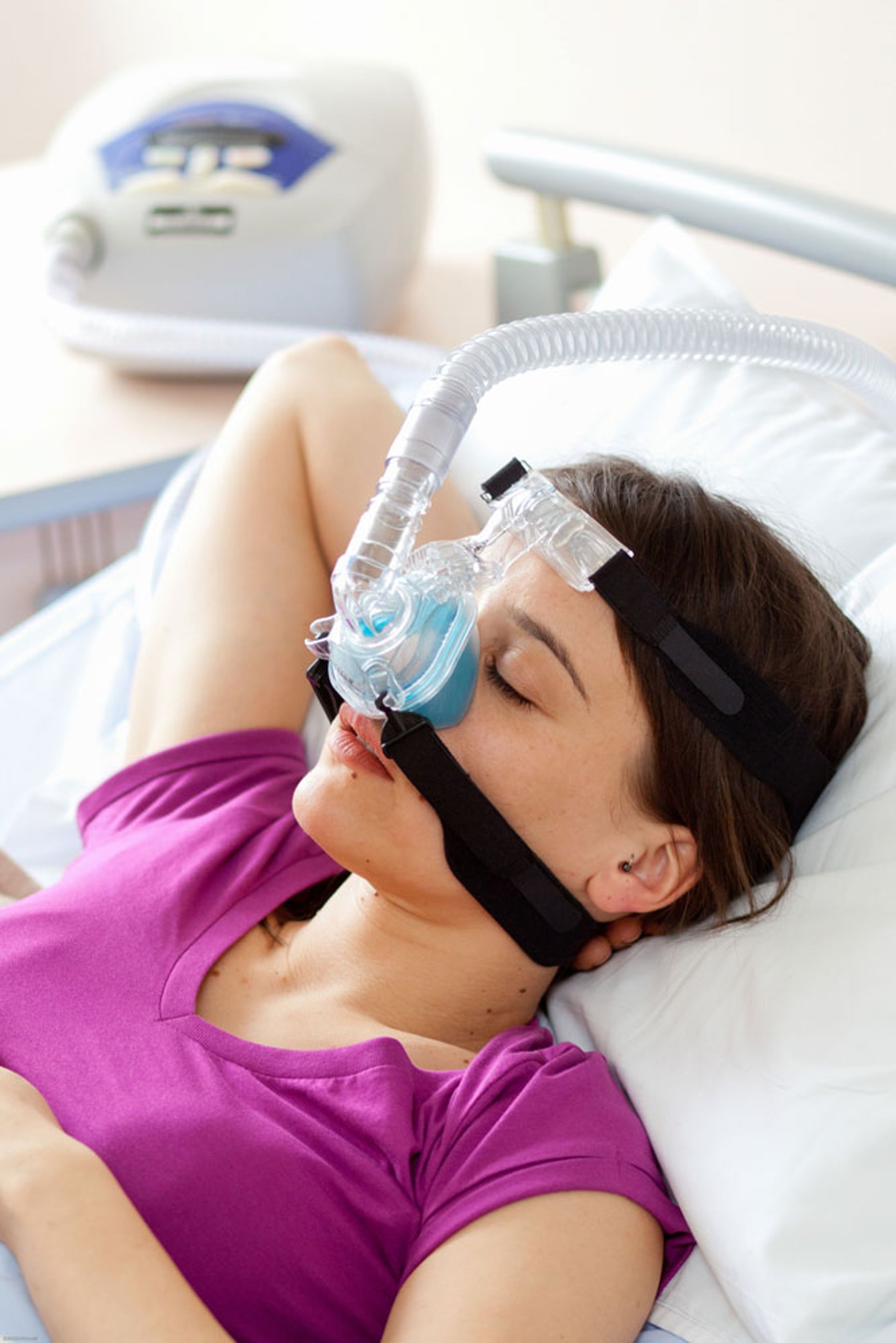
Continuous positive airway pressure (CPAP) machines are used in the treatment of sleep apnea.
BURGER/PHANIE/SCIENCE PHOTO LIBRARY
Mouthpieces are plastic devices that fit over your teeth. You wear them at night. They're a little like the mouth guards that some athletes wear for sports. The mouthpieces are adjusted to pull your jaw forward. Pulling your jaw forward helps keep your throat from closing. A dentist makes the mouthpiece specially to fit your mouth.
Doctors will also have you do other things:
Lose weight if you're overweight
Stop smoking
Avoid drinking alcohol
Avoid medicines that cause drowsiness before bed
Sleep on your side or raise the head of your bed
Sometimes, take medicine to help you stay awake during the day