Alopecia is defined as loss of hair from the body. Hair loss is often a cause of great concern to the patient for cosmetic and psychological reasons, but it can also be an important sign of systemic disease.
(See also Alopecia Areata.)
Pathophysiology of Alopecia
Growth cycle
Hair grows in cycles. Each cycle consists of phases:
Anagen: A long (2- to 6-year) growing phase
Catagen: A brief (3-week) transitional apoptotic phase
Telogen: A short (2- to 3-month) resting phase
At the end of the resting phase, the hair falls out (exogen). Normally, approximately 50 to 100 scalp hairs reach the end of resting phase each day and fall out. When a new hair starts growing in the follicle, the cycle begins again.
Disorders of the growth cycle include
Anagen effluvium—a disruption of the growing phase causing abnormal loss of anagen hairs
Telogen effluvium—significantly more than 100 hairs/day going into resting phase
Classification
Alopecia can be classified as focal or diffuse and by the presence or absence of scarring.
Scarring alopecia is the result of active destruction of the hair follicle. The follicle is irreparably damaged and replaced by fibrotic tissue. Several hair disorders show a biphasic pattern in which nonscarring alopecia occurs early in the course of the disease, and then scarring alopecia and permanent hair loss occurs as the disease progresses. Scarring alopecias can be subdivided further into primary forms, where the target of inflammation is the follicle itself, and secondary forms, where the follicle is destroyed as a result of nonspecific inflammation (see table ).
Nonscarring alopecia results from processes that reduce or slow hair growth without irreparably damaging the hair follicle. Disorders that primarily affect the hair shaft (trichodystrophies) also are considered nonscarring alopecia.
Some Causes of Alopecia
Alopecia Disorder | Causes or Descriptions |
|---|---|
Nonscarring diffuse hair loss | |
Anagen effluvium (caused by agents that impair or disrupt the anagen cycle) | Some chemotherapeutic agents Poisoning (eg, thallium, arsenic, other metals) Radiation (also causes scarring focal hair loss) |
Androgenetic alopecia (male-pattern or female-pattern hair loss) | Androgens (eg, dihydrotestosterone) Familial Pathologic hyperandrogenism (virilization in females—see Hirsutism) |
Congenital disorders | Congenital atrichia with papules Ectodermal dysplasia |
Primary hair shaft abnormalities | Easy hair breakage (trichorrhexis nodosa) Genetic disorders Loose anagen hair syndrome Overuse of hair dryers (bubble hair) |
Telogen effluvium (increased number of hairs entering resting phase) | Medications (eg, some chemotherapeutic agents, anticoagulants, retinoids, oral contraceptives, angiotensin-converting enzyme inhibitors, beta-blockers, lithium, antithyroid medications, antiseizure medications, vitamin A (excess), GLP-1 receptor agonists‡ Endocrine problems (eg, hyperthyroidism, hypothyroidism) Nutritional deficiencies (eg, zinc, biotin, or possibly iron deficiency) Physiologic or psychological stress (eg, surgery, systemic or febrile illness, pregnancy) |
Diffuse loss of scalp hair (less common form of alopecia areata) Alopecia totalis (complete scalp hair loss) Alopecia universalis (complete scalp and body hair loss) | |
Commonly causes diffuse hair loss | |
Secondary syphilis can cause diffuse hair loss, but it can be focal with a patchy moth-eaten appearance or mixed | |
Nonscarring focal hair loss | |
Patchy loss of scalp hair (most common form of alopecia areata) Ophiasis (band pattern hair loss along periphery of temporal and occipital scalp) Sisaipho (central hair loss, sparing hair at the margin of the scalp) | |
Microsporum audouinii Microsporum canis Trichophyton schoenleinii Trichophyton tonsurans | |
Traction alopecia* | Traction due to braids, rollers, or ponytails (occurs primarily at frontal and temporal hairlines) |
Secondary syphilis can cause patchy focal hair loss with a moth-eaten appearance, but it can be diffuse or mixed | |
Other | Hair loss due to compulsive hair pulling, twisting, or teasing (trichotillomania) Postoperative (pressure-induced) alopecia Primary hair shaft abnormalities (can also cause nonscarring diffuse alopecia) Temporal triangular alopecia |
Scarring hair loss (focal or diffuse) | |
Acne keloidalis nuchae | Folliculitis on the occipital scalp that results in scarring alopecia |
Central centrifugal cicatricial alopecia | Progressive scarring alopecia on the crown or vertex of the scalp Most common cause of alopecia in Black patients, typically occurring in women of African descent |
Chronic cutaneous (discoid) lupus | Discoid lupus lesions of the scalp |
Dissecting cellulitis of the scalp | Boggy inflammatory nodules that coalesce with sinus tract formation Part of the follicular occlusion tetrad† |
Folliculitis decalvans | Solitary or multiple areas of scarring hair loss, typically on the crown of the scalp, with follicular pustules, crusts, and scale Tufted hairs (multiple hair shafts emerging from a single hair follicle) |
Lichen planopilaris and frontal fibrosing alopecia | Typically perifollicular erythema and follicular hyperkeratosis Frontal fibrosing alopecia, a variant of lichen planopilaris, characterized by hair loss and scarring in the frontal region of the scalp |
Secondary scarring alopecias | Burns Morphea (localized scleroderma) Progressive systemic sclerosis (scleroderma) Radiation therapy (also causes nonscarring diffuse hair loss) Superinfected kerion (due to severe primary syphilis or severe tinea capitis) Trauma |
* Tinea capitis and traction alopecia can cause scarring if the follicle is sufficiently damaged. | |
† The follicular occlusion tetrad consists of acne conglobata, hidradenitis suppurativa, dissecting cellulitis of the scalp, and pilonidal sinus—disorders that have follicular occlusion in apocrine gland–bearing skin in common. | |
‡ Neubauer Z, Ong MM, Singal A, et al. Increased risk of telogen effluvium with tirzepatide compared to other weight loss medications: A retrospective cohort TriNetX database study. J Am Acad Dermatol. 2025;93(6):1612-1614. doi:10.1016/j.jaad.2025.08.033 | |
Etiology of Alopecia
The alopecias comprise a large group of disorders with multiple and varying etiologies (see table ).

The most common cause of alopecia is:
Androgenetic alopecia (male-pattern or female-pattern hair loss)
Androgenetic alopecia is an androgen-dependent hereditary disorder in which dihydrotestosterone plays a major role. The prevalence of this form of alopecia increases with age, and it can affect over 70% of men (male-pattern hair loss) and 57% of all women (female-pattern hair loss) over the age of 80 (1, 2). However, prevalence rates vary among different populations.

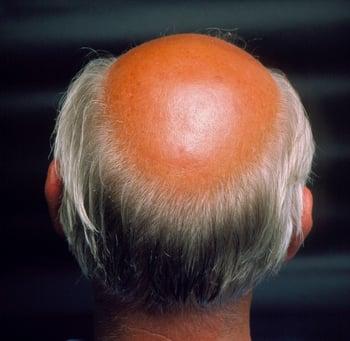
This image shows androgenetic alopecia (male-pattern baldness).
Other common causes of hair loss are
Medications (including chemotherapeutic agents)
Infection (eg, tinea capitis, kerion)
Systemic disorders (eg, disorders that cause high fever, endocrine disorders)
Trauma
Traumatic causes include trichotillomania, traction alopecia, burns, radiation, and pressure-induced (eg, postoperative) hair loss.
Less common causes are:
Primary hair shaft abnormalities
Autoimmune diseases
Lichen planopilaris/frontal fibrosing alopecia
Rare dermatologic conditions (eg, dissecting cellulitis of the scalp)
Etiology references
1. Adil A, Godwin M. The effectiveness of treatments for androgenetic alopecia: A systematic review and meta-analysis. J Am Acad Dermatol 2017;77(1):136–141.e5. doi: 10.1016/j.jaad.2017.02.054
2. Gan DC, Sinclair RD. Prevalence of male and female pattern hair loss in Maryborough. J Investig Dermatol Symp Proc 2005;10(3):184-189. doi: 10.1111/j.1087-0024.2005.10102.x
Evaluation of Alopecia
History
History of present illness should cover the onset and duration of hair loss, whether hair shedding is increased, and whether hair loss is generalized or localized. Associated symptoms such as pruritus and scaling should be noted. Patients should be asked about typical hair care practices, including use of braids, rollers, and hair dryers, and whether they routinely pull or twist their hair.
Review of systems should include recent exposures to noxious stimuli (eg, medications, illicit drugs, toxins, radiation) and stressors (eg, surgery, chronic illness, fever, psychological stressors). Symptoms of possible causes (eg, fatigue and hot or cold intolerance [hypothyroidism/hyperthyroidism] and, in women, hirsutism, deepening of the voice, and increased libido [virilization]) should be sought. Other features, including dramatic weight loss, dietary practices (including various restrictive diets), and obsessive-compulsive behavior, should be noted. In women, a hormonal/gynecologic/obstetric history should be obtained.
Past medical history should note known possible causes of hair loss, including endocrine and skin disorders. Current and recent medication use should be reviewed for offending agents (see table ). A family history of hair loss should be recorded.
Physical examination
Examination of the scalp should note the distribution of hair loss, the presence and characteristics of any skin lesions, and whether there is scarring. Part widths should be measured. Abnormalities of the hair shafts, as evaluated by trichoscopy with a dermatoscope or light microscopy, should be noted.
A full skin examination should be performed to evaluate hair loss elsewhere on the body (eg, eyebrows, eyelashes, arms, legs), rashes that may be associated with certain types of alopecia (eg, discoid lupus lesions, signs of secondary syphilis or of other bacterial or fungal infections), and signs of virilization in women (eg, hirsutism, acne, deepening voice, clitoromegaly). Signs of potential underlying systemic disorders should be sought, and a thyroid examination should be performed.
Red flags
The following findings are of particular concern:
Virilization in women
Signs of systemic illness or constellations of nonspecific findings possibly indicating poisoning
Interpretation of findings
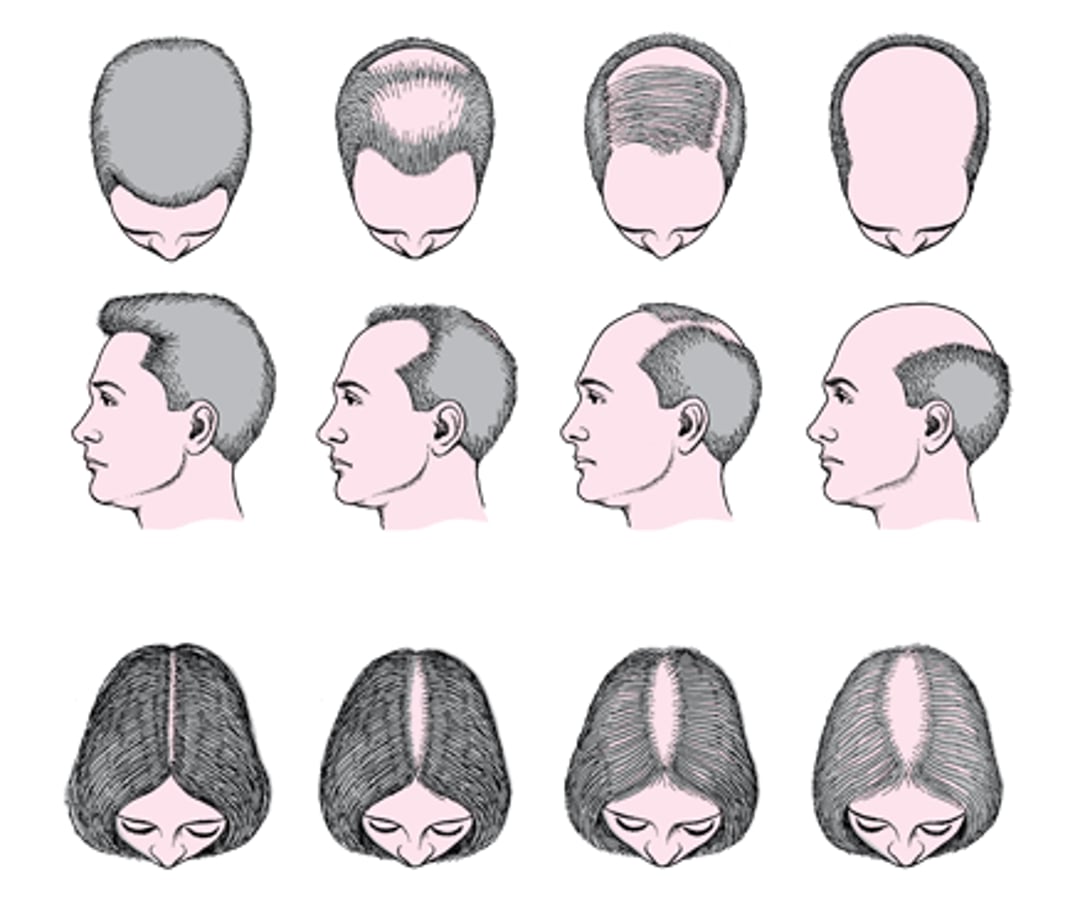
Hair loss that begins at the temples and/or crown (vertex) and spreads to diffuse thinning or nearly complete hair loss is typical of male-pattern hair loss. Hair thinning on the crown manifesting as widening of the central part is typical of female-pattern hair loss (see figure ). In women, this is characterized by a central part width that is wider on the crown of the scalp than it is on the occipital scalp.
Male- and Female-Pattern Hair Loss (Androgenetic Alopecia)

Hair loss that occurs 2 to 4 weeks after chemotherapy or radiation therapy (anagen effluvium) can typically be ascribed to those causes. Hair loss that occurs 3 to 4 months after a major stressor (pregnancy, major febrile illness, surgery, medication change, or severe psychological stressor) suggests a diagnosis of telogen effluvium.
Other findings help suggest alternative diagnoses (see table ).
Interpreting Physical Findings in Alopecia
Finding | Possible Causes |
|---|---|
Asymmetric, bizarre, irregular hair loss pattern | |
Circular, discrete patches of loss; short, broken hairs; exclamation point hairs at periphery of patches | |
Patchy hair loss that appears moth-eaten | |
Erythema and scaling | Chronic cutaneous lupus, lichen planopilaris Tinea capitis (particularly if adenopathy is present) |
Pustules | Scarring dermatologic or infectious process (eg, dissecting cellulitis of the scalp, folliculitis decalvans, acne keloidalis nuchae) |
Scalp and body hair loss | Alopecia universalis |
Unruly or unusually wooly hair | Primary hair shaft abnormality |
Virilization (see Hirsutism) | Adrenal disorder or tumor Anabolic steroid use (sometimes surreptitious) |

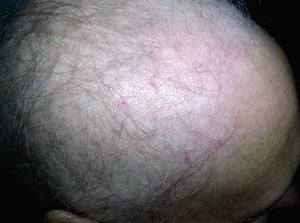
Anagen effluvium is a physiologic disruption of the anagen (growing) phase. It typically occurs several weeks after chemotherapy or radiation therapy. This photo shows an abrupt loss of hairs in the anagen phase along with sparse broken anagen hairs.
Anagen effluvium is a physiologic disruption of the anagen (growing) phase. It typically occurs several weeks after che
© Springer Science+Business Media

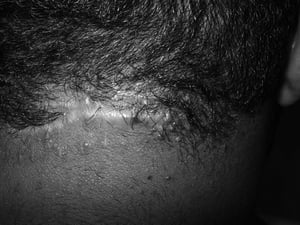
This photo shows typical acneiform lesions and deep keloidal scarring alopecia in a young male with acne keloidalis nuchae.
This photo shows typical acneiform lesions and deep keloidal scarring alopecia in a young male with acne keloidalis nuc
© Springer Science+Business Media

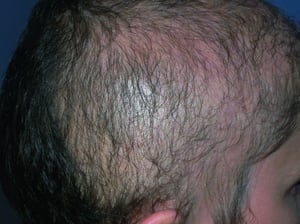
In this photo, the hair pulling is limited to the range of the person's right hand.
In this photo, the hair pulling is limited to the range of the person's right hand.
© Springer Science+Business Media
Anagen effluvium is a physiologic disruption of the anagen (growing) phase. It typically occurs several weeks after chemotherapy or radiation therapy. This photo shows an abrupt loss of hairs in the anagen phase along with sparse broken anagen hairs.
Anagen effluvium is a physiologic disruption of the anagen (growing) phase. It typically occurs several weeks after che
© Springer Science+Business Media
This photo shows typical acneiform lesions and deep keloidal scarring alopecia in a young male with acne keloidalis nuchae.
This photo shows typical acneiform lesions and deep keloidal scarring alopecia in a young male with acne keloidalis nuc
© Springer Science+Business Media
In this photo, the hair pulling is limited to the range of the person's right hand.
In this photo, the hair pulling is limited to the range of the person's right hand.
© Springer Science+Business Media
Other than hair loss, scalp symptoms (eg, itching, burning, tingling) are often absent and, when present, are not specific to any cause.
Signs of hair loss in patterns other than those described above are nondiagnostic and may require microscopic hair examination or scalp biopsy for definitive diagnosis.
Testing
Evaluation for causative disorders (eg, endocrinologic, autoimmune, toxic) should be performed based on clinical suspicion.
Male-pattern hair loss usually requires no testing. When it occurs in young men with no family history, the physician should question the patient about use of anabolic steroids and other medications. In addition to questions regarding prescription medication and illicit drug use, women with significant hair loss and abnormal menses, acne, hirsutism, or other evidence of virilization should have levels of appropriate hormones (eg, testosterone and dehydroepiandrosterone sulfate [DHEAS]) measured (see Hirsutism). Other laboratory testing in women with suspected androgenetic alopecia can include iron, ferritin, vitamin D, and thyroid function testing if indicated by history.
The pull test helps evaluate diffuse scalp hair loss. Gentle traction is exerted on a bunch of hairs (approximately 40) on at least 3 different areas of the scalp, and the number of extracted hairs is then counted. Normally, < 3 telogen-phase hairs should come out with each pull. If > 4 to 6 hairs come out with each pull, the pull test is positive and is suggestive of telogen effluvium. However, this test can also be positive in patients with anagen effluvium, loose anagen syndrome, early androgenetic alopecia, or advanced alopecia areata. The tug test can be performed to test hair fragility by holding a group of hairs near the middle of the hair shaft with one hand and using the other hand to tug at the distal end of the shaft, thereby pulling against the hand more proximal to the scalp. Hair breakage with the tug indicates fragile hair and the possibility of a hair shaft abnormality. The card test can be used to evaluate the hair shaft and to determine if hairs are newly growing, broken or miniaturized. This is done by holding a small card of contrasting color on the scalp against the hair shafts in the affected areas and examining the hairs against the card.
Trichoscopy is a simple noninvasive test that can aid in diagnosing hair loss. It uses a magnifying tool, such as a dermatoscope, to examine the hair and scalp.
Hairs can be mounted on slides and examined under a light microscope to evaluate the hair cycle phase (anagen, catagen, or telogen) and whether or not a hair shaft abnormality is present. Fungal infections affecting the hair shaft can also be visualized under light microscopy. However, with increasing use of trichoscopy, this test is now utilized less frequently.
Scalp biopsy is indicated when alopecia persists and diagnosis is in doubt. A 4-mm punch biopsy sectioned horizontally is preferred. Biopsy differentiates scarring from nonscarring forms. In cases of suspected cicatricial alopecia, specimens should be taken from areas of active inflammation, typically at the border of a bald patch. Noncicatricial alopecia should be sampled where hair is most sparse, typically in the center of the lesion. Fungal and bacterial cultures may be useful.
Daily hair counts can be done by the patient to quantify hair loss when the pull test is negative. Hairs lost during the first morning combing or during washing are collected in clear plastic bags daily for 14 days. The number of hairs in each bag is then recorded. Scalp hair counts of > 100/day are abnormal except after shampooing, when hair counts of up to 250 may be normal. Hairs may be brought in by the patient for microscopic examination.
Treatment of Alopecia
Medications (including hormonal modulators)
Laser light therapy
Surgery
Androgenetic alopecia
Minoxidil works by mechanisms that are not completely understood to shorten the telogen phase, lengthen the anagen phase, and promote growth in hair follicle size and in hair shaft diameter. Topical minoxidil (2% solution twice daily or 5% foam once daily for women, or 5% solution or foam twice daily for men) applied to the scalp is most effective for vertex alopecia in male-pattern or female-pattern hair loss. The 5% preparation is more efficacious than the 2% solution but causes more pruritus and irritation, and adherence is often a limiting factor (1). Topical minoxidil is also used for other causes of hair loss, including alopecia areata, telogen effluvium, traction alopecia, and persistent chemotherapy-induced alopecia, though the evidence for some of these indications is mixed (2). Hair regrowth can take 6 months or longer (2). Treatment is continued indefinitely because, once treatment is stopped, hair loss resumes. The most frequent adverse effects are transient shedding when treatment is first initiated, mild scalp irritation, allergic contact dermatitis, and increased facial hair. Low-dose oral minoxidil in doses ranging from 0.625to 5 mg once/day is increasingly being utilized for hair loss, but transient hair shedding, facial hypertrichosis and rarely cardiovascular adverse events such as lightheadedness, fluid retention, tachycardia, and rarely, pericardial effusion can occur (3, 4, 5, 6, 7). Studies have shown that topical minoxidil and low dose oral minoxidil are similar in efficacy (8, 9).
Finasteride inhibits the 5-alpha-reductase enzyme, blocking conversion of testosterone to dihydrotestosterone, and is useful for male-pattern hair loss. Finasteride 1 mg orally once/day can stop hair loss and can stimulate hair growth. Efficacy is usually evident within 6 to 8 months of treatment. Adverse effects include decreased libido; erectile and ejaculatory dysfunction, which may persist even after cessation of treatment (see Male Sexual Dysfunction); hypersensitivity reactions; gynecomastia; myopathy; and rarely symptoms of depression and suicidal ideation (10). There may be a decrease in prostate-specific antigen (PSA) levels in older men, which should be taken into account when this test is used for cancer screening in patients taking finasteride. Common practice is to continue treatment for as long as positive results persist. Once treatment is stopped, hair loss returns to previous levels. Finasteride in higher doses is sometimes used for androgenetic alopecia in women of non-childbearing potential; it is contraindicated in pregnant women because it has teratogenic effects in animals (11).
Dutasteride, a medication used to treat benign prostatic hyperplasia, is a stronger inhibitor of 5-alpha-reductase than finasteride and is sometimes used to treat androgenetic alopecia (4).
Hormonal modulators, such as spironolactone, hormonal contraceptives, and bicalutamide, may be useful for female-pattern hair loss (11, 12, 13, 14).
Low-level laser light therapy has been shown to promote hair growth and is an alternate or additional treatment for androgenetic alopecia (15). Physician-dispensed and over-the-counter devices are available.
Autologous platelet-rich plasma injected into the scalp is thought to contain growth factors that promote hair follicle growth and maintenance (16, 17). It has shown efficacy for androgenetic alopecia, either as monotherapy or in addition to conventional treatments, and can be used in conjunction with hair transplantation. However, there is currently no standardized method of preparation or treatment with platelet rich plasma, which makes evaluation of study results difficult. Treatments are usually administered monthly for the first three months and then every three months for the first year, followed by varied longterm maintenance schedules.
Surgical options include follicle transplant, scalp flaps, and alopecia reduction. Few procedures have been subjected to scientific scrutiny, but patients who are self-conscious about their hair loss may consider them (13).
Hair loss due to other causes
Underlying disorders are treated.
Treatment for alopecia areata includes topical, intralesional, or, in severe cases, systemic glucocorticoids, topical or oral minoxidil, topical anthralin, topical immunotherapy (diphenylcyclopropenone or squaric acid dibutylester), oral Janus kinase inhibitors (eg, baricitinib, ritlecitinib, deuruxolitinib), and oral methotrexate.
Treatment for traction alopecia is elimination of physical traction or stress to the scalp.
Treatment for tinea capitis is oral antifungal agents such as terbinafine, itraconazole, fluconazole or griseofulvin.
Trichotillomania is difficult to treat, but behavior modification, clomipramine, or a selective serotonin reuptake inhibitor (SSRI—eg, fluoxetine, fluvoxamine, paroxetine, sertraline, citalopram) may be of benefit.
Scarring alopecia as in folliculitis decalvans or dissecting cellulitis of the scalp is best treated with an oral tetracycline plus a potent topical or intralesional glucocorticoid. Isotretinoin or immunosuppressive medications can be used for severe cases. Severe or chronic acne keloidalis nuchae can be treated similarly with an oral tetracycline plus a potent topical or intralesional glucocorticoid. Isotretinoin, surgical excision, or laser resurfacing can be used for recalcitrant cases. If acne keloidalis nuchae is mild, topical retinoids, topical antibiotics, and/or topical benzoyl peroxide may suffice.
Central centrifugal cicatricial alopecia is best treated with high-potency topical or intralesional glucocorticoids and tetracycline antibiotics. Low-dose oral or topical metformin, especially in patients with a history of insulin resistance, is sometimes utilized (18, 19). Lichen planopilaris, frontal fibrosing alopecia (a variant of lichen planopilaris), and chronic cutaneous lupus lesions may be treated with medications such as topical or intralesional glucocorticoids, topical calcineurin inhibitors such as tacrolimus or pimecrolimus, oral antimalarials, topical or oral Janus kinase inhibitors (19, 20), or oral immunosuppressants such as glucocorticoids, methotrexate, and mycophenolate mofetil (19, 21). Lichen planopilaris and frontal fibrosing alopecia can also be treated with tetracyclines (22, 23, 24). Finasteride and dutasteride (19, 25, 26) can be prescribed to treat frontal fibrosing alopecia while retinoids, dapsone, thalidomide, lenalidomide, anifrolumab, belimumab, rituximab, and IVIG can be prescribed for chronic, refractory cutaneous lupus lesions (27, 28).
Patients with scarring hair loss disorders such as lichen planopilaris, frontal fibrosing alopecia, and chronic cutaneous lupus lesions should not smoke, should avoid sun exposure, and should use sunscreen regularly (28).
Hair loss due to chemotherapy (anagen effluvium) is temporary and is best treated with a wig; when hair regrows, it may be different in color and texture from the original hair (29, 30). Hair loss due to telogen effluvium is usually temporary as well and abates after the precipitating agent is eliminated. Oral or topical minoxidil can be used to speed recovery in both conditions (31).
Types of Hair Loss and Treatments
Cause | Treatment(s) |
|---|---|
Acne keloidalis nuchae | Topical or intralesional glucocorticoids Oral doxycycline or minocycline Topical retinoids and/or topical benzoyl peroxide Topical antibiotics and/or topical benzoyl peroxide Isotretinoin Laser resurfacing Surgical excision |
Glucocorticoids (topical, intralesional, or systemic) Minoxidil Topical anthralin Topical immunotherapy (diphenylcyclopropenone or squaric acid dibutylester) Janus kinase inhibitors (baricitinib, ritlecitinib, deuruxolitinib) Methotrexate | |
Anagen effluvium (chemotherapy hair loss) | Oral and topical minoxidil |
Androgenetic alopecia | Dutasteride Finasteride Hormonal modulators Low-level laser light therapy Minoxidil (oral or topical). Surgery Autologous platelet-rich plasma |
Central centrifugal cicatricial alopecia | High-potency topical or intralesional glucocorticoids Tetracycline antibiotics Low-dose oral or topical metformin (in patients with history of insulin resistance) |
Chronic cutaneous lupus lesions | Topical or intralesional glucocorticoids Topical calcineurin inhibitors (eg, tacrolimus, pimecrolimus) Oral antimalarials Topical Janus kinase inhibitors |
Chronic cutaneous lupus lesions (refractory) | Retinoids Dapsone Thalidomide Lenalidomide Anifrolumab Rituximab Oral glucocorticoids Mycophenolate mofetil Methotrexate Belimumab Oral Janus kinase inhibitors |
Frontal fibrosing alopecia | Topical or intralesional glucocorticoids Oral antimalarials Topical or oral Janus kinase inhibitors Topical calcineurin inhibitors (eg, tacrolimus, pimecrolimus) Finasteride Dutasteride Tetracyclines |
Lichen planopilaris | Topical or intralesional glucocorticoids Oral antimalarials Topical or oral Janus kinase inhibitors Topical calcineurin inhibitors (eg, tacrolimus, pimecrolimus) Tetracyclines |
Scarring alopecia (eg, folliculitis decalvans, dissecting cellulitis) | Oral tetracycline Potent topical or intralesional glucocorticoid |
Scarring alopecia (eg, folliculitis decalvans, dissecting cellulitis) (severe) | Isotretinoin Immunosuppressive medications |
Telogen effluvium | Oral and topical minoxidil |
Tinea capitis | Oral antifungals |
Traction alopecia | Elimination of physical traction or stress to the scalp |
Trichotillomania | Behavior modification Clomipramine SSRIs (eg, fluoxetine, fluvoxamine, paroxetine, sertraline, citalopram) |
SSRI = selective serotonin reuptake inhibitor | |
Treatment references
1. Olsen EA, Dunlap FE, Funicella T, et al. A randomized clinical trial of 5% topical minoxidil versus 2% topical minoxidil and placebo in the treatment of androgenetic alopecia in men. J Am Acad Dermatol 2002;47(3):377-385, 2002. doi: 10.1067/mjd.2002.124088
2. Stoehr JR, Choi JN, Colavincenzo M, et al. Off-Label Use of Topical Minoxidil in Alopecia: A Review. Am J Clin Dermatol. 2019;20(2):237-250. doi:10.1007/s40257-018-0409-y
3. Randolph M, Tosti A. Oral minoxidil treatment for hair loss: A review of efficacy and safety. J Am Acad Dermatol. 2021;84(3):737–746. doi: 10.1016/j.jaad.2020.06.1009
4. Gupta AK, Venkataraman M, Talukder M, Bamimore MA. Relative efficacy of minoxidil and the 5-α reductase inhibitors in androgenetic alopecia treatment of male patients: A network meta-analysis. JAMA Dermatol. 2022;158(3):266–274. doi: 10.1001/jamadermatol.2021.5743
5. Akiska YM, Mirmirani P, Roseborough I, et al. Low-Dose Oral Minoxidil Initiation for Patients With Hair Loss: An International Modified Delphi Consensus Statement. JAMA Dermatol. 2025;161(1):87-95. doi:10.1001/jamadermatol.2024.4593
6. Vañó-Galván S, Pirmez R, Hermosa-Gelbard A, et al. Safety of low-dose oral minoxidil for hair loss: A multicenter study of 1404 patients. J Am Acad Dermatol. 2021;84(6):1644-1651. doi:10.1016/j.jaad.2021.02.054
7. Dlova NC, Jacobs T, Singh S. Pericardial, pleural effusion and anasarca: A rare complication of low-dose oral minoxidil for hair loss. JAAD Case Rep. 2022;28:94-96. Published 2022 Aug 11. doi:10.1016/j.jdcr.2022.07.044
8. Penha MA, Miot HA, Kasprzak M, et al. Oral Minoxidil vs Topical Minoxidil for Male Androgenetic Alopecia: A Randomized Clinical Trial. JAMA Dermatol. 2024;160(6):600-605. doi:10.1001/jamadermatol.2024.0284
9. Asilian A, Farmani A, Saber M. Clinical efficacy and safety of low-dose oral minoxidil versus topical solution in the improvement of androgenetic alopecia: A randomized controlled trial. J Cosmet Dermatol. 2024;23(3):949-957. doi:10.1111/jocd.16086
10. Nguyen D-D, Marchese M, Cone EB, et al. Investigation of suicidality and psychological adverse events in patients treated with finasteride. JAMA Dermatol. 2021;157(1):35-42, 2021. doi:10.1001/jamadermatol.2020.3385
11. Ong MM, Avram M, McMichael A, et al. Antiandrogen therapy for the treatment of female pattern hair loss: A clinical review of current and emerging therapies. J Am Acad Dermatol. 2025;93(3):749-760. doi:10.1016/j.jaad.2025.04.074
12. Sinclair R, Wewerinke M, Jolley D. Treatment of female pattern hair loss with oral antiandrogens. Br J Dermatol. 2005;152(3):466-73. doi: 10.1111/j.1365-2133.2005.06218.x
13. Famenini S, Slaught C, Duan L, et al. Demographics of women with female pattern hair loss and the effectiveness of spironolactone therapy. J Am Acad Dermatol. 2015;73(4):705-6, 201570. doi: 10.1016/j.jaad.2015.06.063
14. Adil A, Godwin M. The effectiveness of treatments for androgenetic alopecia: A systematic review and meta-analysis. J Am Acad Dermatol. 2017;77(1):136-141.e5, 2017. doi: 10.1016/j.jaad.2017.02.054
15. Jimenez JJ, Wikramanayake TC, Bergfeld W, et al: Efficacy and safety of a low-level laser device in the treatment of male and female pattern hair loss: A multicenter, randomized, sham device-controlled, double-blind study. Am J Clin Dermatol. 2014;15(2):115-27. doi: 10.1007/s40257-013-0060-6
16. Hesseler MJ, Shyam N. Platelet-rich plasma and its utilities in alopecia: A systematic review. Dermatol Surg. 2020;46(1):93–102, 2020. doi: 10.1097/DSS.0000000000001965
17. Paichitrojjana A, Paichitrojjana A. Platelet Rich Plasma and Its Use in Hair Regrowth: A Review. Drug Des Devel Ther. 2022;16:635-645. Published 2022 Mar 10. doi:10.2147/DDDT.S356858
18. Bao A, Qadri A, Gadre A, et al. Low-Dose Metformin and Profibrotic Signature in Central Centrifugal Cicatricial Alopecia. JAMA Dermatol. 2024;160(11):1211-1219. doi:10.1001/jamadermatol.2024.3062
19. Ezemma O, Devjani S, Kelley KJ, et al. Treatment modalities for lymphocytic and neutrophilic scarring alopecia. J Am Acad Dermatol. 89(2S):S33-S35, 2023. doi: 10.1016/j.jaad.2023.04.023
20. Abduelmula A, Sood S, Mufti A, et al. Management of cutaneous lupus erythematosus with Janus kinase inhibitor therapy: An evidence-based review. J Am Acad Dermatol. 2023;89(1):130-131. doi: 10.1016/j.jaad.2022.12.037
21. Fechine COC, Valente NYS, Romiti R. Lichen planopilaris and frontal fibrosing alopecia: Review and update of diagnostic and therapeutic features. An Bras Dermatol. 2022;97(3):348-357. doi: 10.1016/j.abd.2021.08.008
22. Wyche J, Senna M, Aguh C. Approach to Scarring Alopecia. JAMA Dermatol. 2025;161(12):1281-1282. doi:10.1001/jamadermatol.2025.3540
23. Ezemma O, Devjani S, Kelley KJ, et al. Treatment modalities for lymphocytic and neutrophilic scarring alopecia. J Am Acad Dermatol. 2023;89(2S):S33-S35. doi:10.1016/j.jaad.2023.04.023
24. Ezzat RZ, Alenezi S, Miteva M. Frontal fibrosing alopecia part II: Etiopathogenesis and management. J Am Acad Dermatol. 2026;94(4):1075-1085. doi:10.1016/j.jaad.2024.08.086
25. Ho A, Shapiro J. Medical therapy for frontal fibrosing alopecia: A review and clinical approach. J Am Acad Dermatol. 2019;81(2):568-580. doi: 10.1016/j.jaad.2019.03.079
26. Pindado-Ortega C, Saceda-Corralo D, Moreno-Arrones, et al. Effectiveness of dutasteride in a large series of patients with frontal fibrosing alopecia in real clinical practice. J Am Acad Dermatol. 2021;84(5):1285-1294. doi: 10.1016/j.jaad.2020.09.093
27. Verdelli A, Corrà A, Mariotti EB, et al. An update on the management of refractory cutaneous lupus erythematosus. Front Med (Lausanne). 2022;9:941003. doi: 10.3389/fmed.2022.941003
28. Sammaritano LR, Askanase A, Bermas BL, et al. 2025 American College of Rheumatology (ACR) Guideline for the Treatment of Systemic Lupus Erythematosus. Arthritis Care Res (Hoboken). 2026;78(7):815-839. doi:10.1002/acr.25690
29. Paus R, Haslam IS, Sharov AA, et al. Pathobiology of chemotherapy-induced hair loss. Lancet Oncol. 2013;14(2):e50-e59. doi:10.1016/S1470-2045(12)70553-3
30. Freites-Martinez A, Chan D, Sibaud V, et al. Assessment of Quality of Life and Treatment Outcomes of Patients With Persistent Postchemotherapy Alopecia. JAMA Dermatol. 2019;155(6):724-728. doi:10.1001/jamadermatol.2018.5071
31. Ohyama M, Irisawa R, Uchiyama M, et al. Use of 5% Topical Minoxidil Application for Telogen Effluvium: An Open-Label Single-Arm Clinical Trial. J Dermatol. 2025;52(9):1351-1359. doi:10.1111/1346-8138.17844
Key Points
Androgenetic alopecia (male-pattern and female-pattern hair loss) is the most common type of hair loss.
Concomitant virilization in women should prompt a thorough evaluation for an underlying disorder.
Microscopic hair examination or scalp biopsy may be required for definitive diagnosis in patients with alopecia.
Treatments for male and female pattern hair loss include topical or oral minoxidil or oral finasteride for male-pattern hair loss; topical or oral minoxidil, spironolactone, or oral contraceptives for female-pattern hair loss; sometimes scalp injections with platelet-rich plasma, low level laser light therapy, follicle transplant, or other surgical procedures.
Hair loss due to anagen or telogen effluvium can be treated with oral and topical minoxidil.
Treatment of scarring alopecia is varied and depends upon the specific underlying disorder.