Infectious mononucleosis is caused by Epstein-Barr virus (EBV, human herpesvirus type 4) and is characterized by fatigue, fever, pharyngitis, and lymphadenopathy. Fatigue may persist for weeks or months. Severe complications, including airway obstruction, splenic rupture, and neurologic syndromes, occasionally occur. Diagnosis is clinical or with EBV serologic testing. Treatment is supportive.
EBV is a herpesvirus that infects 50% of children before age 5 (1). EBV seroprevalence among children and adolescents aged 6 to 19 years was approximately 66% in one observational study of United States National Health and Nutrition Examination Survey (NHANES) data (2). Over 95% of adults are seropositive for EBV, making it one of the most ubiquitous human viruses worldwide (3).
EBV infection is usually asymptomatic.
(See Overview of Herpesvirus Infections.)
General references
1. Johannsen EC, Kaye KM: Epstein-Barr Virus (Infectious Mononucleosis, Epstein-Barr Virus–Associated Malignant Diseases, and Other Diseases). In: Blaser M, Cohen JI, Holland SM, Doi Y, Falsey AR, Garrett WS, Marr KA, Mitre E, Wiilson E, eds. Mandell, Douglas, and Bennett's Principles and Practice of Infectious Diseases. 10th ed, Elsevier Saunders, 2026:1844–861.
2. Dowd JB, Palermo T, Brite J, McDade TW, Aiello A. Seroprevalence of Epstein-Barr virus infection in U.S. children ages 6-19, 2003-2010. PLoS One. 2013;8(5):e64921. Published 2013 May 22. doi:10.1371/journal.pone.0064921
3. Luzuriaga K, Sullivan JL. Infectious mononucleosis. N Engl J Med. 2010;362(21):1993-2000. doi:10.1056/NEJMcp1001116
Pathophysiology of Infectious Mononucleosis


This illustration shows the outer viral structure of the EBV including the other envelope, which is a lipid membrane derived from the host cell that is studded with externally projecting glycoprotein spikes. The spikes help the virus attach to and enter host cells such as B lymphocytes and other epithelial cells.
Dr_Microbe/stock.adobe.com
After exposure in the oral cavity (eg, from kissing), EBV infects B lymphocytes. Morphologically abnormal (atypical) lymphocytes develop, mainly from CD8+ T lymphocytes that respond to the infection, and are likely responsible for the cytotoxic elimination of infected B lymphocytes, thereby reducing viral load and controlling infection.
After primary infection, EBV remains within the host (primarily in B lymphocytes) for life and undergoes intermittent asymptomatic shedding from the oropharynx. The virus is detectable in oropharyngeal secretions of 10 to 20% of immunocompetent EBV-seropositive adults (1). Shedding increases in frequency and titer in immunocompromised patients (eg, organ allograft recipients, people living with HIV).
EBV has not been recovered from environmental sources and is not very contagious.
Transmission
Transmission may occur via transfusion of blood products but much more frequently occurs via kissing between an uninfected and an EBV-seropositive person who is shedding the virus asymptomatically. Only about 5% of patients acquire EBV from someone who has acute infection (1).
Early childhood transmission occurs more frequently among lower socioeconomic groups and in crowded conditions.
Associated disorders
EBV is statistically associated with and likely has a causal role in the following (2):
Certain lymphomas (eg, Burkitt lymphoma, certain forms of Hodgkin lymphoma, some large B-cell lymphomas)
Posttransplant lymphoproliferative disorder
Nasopharyngeal carcinoma in southern China and among the Inuit in Alaska
Certain gastric cancers
Certain cases of hemophagocytic lymphohistiocytosis (HLH)
Certain genetic disorders, such as X-linked lymphoproliferative disease, predispose to severe EBV disease
EBV is not the cause chronic fatigue syndrome (1). However, it rarely causes a syndrome that may include fever, interstitial pneumonitis, pancytopenia, hepatitis, or uveitis (eg, chronic active EBV).
Pathophysiology references
1. Johannsen EC, Kaye KM: Epstein-Barr Virus (Infectious Mononucleosis, Epstein-Barr Virus–Associated Malignant Diseases, and Other Diseases). In: Blaser M, Cohen JI, Holland SM, Doi Y, Falsey AR, Garrett WS, Marr KA, Mitre E, Wiilson E, eds. Mandell, Douglas, and Bennett's Principles and Practice of Infectious Diseases. 10th ed, Elsevier Saunders, 2026:1844–861.
2. Meirhaeghe MR, Balfour HH Jr. Epstein-Barr virus (EBV) infection and its sequelae in the immunocompetent host. J Clin Virol.2025;180:105854. doi:10.1016/j.jcv.2025.105854
Symptoms and Signs of Infectious Mononucleosis
In most young children, primary EBV infection is asymptomatic. Symptoms of infectious mononucleosis develop most often in adolescents and adults.
The incubation period ranges from about 30 to 50 days (1, 2). Fatigue can last for months but is usually maximal during the first 2 to 3 weeks.
Most patients have the triad of
Fever
Pharyngitis
Adenopathy
Fever usually peaks in the afternoon or early evening, with a temperature around 39.5° C, although it may reach 40.5° C.
Pharyngitis may be severe, painful, and exudative and may resemble streptococcal pharyngitis.

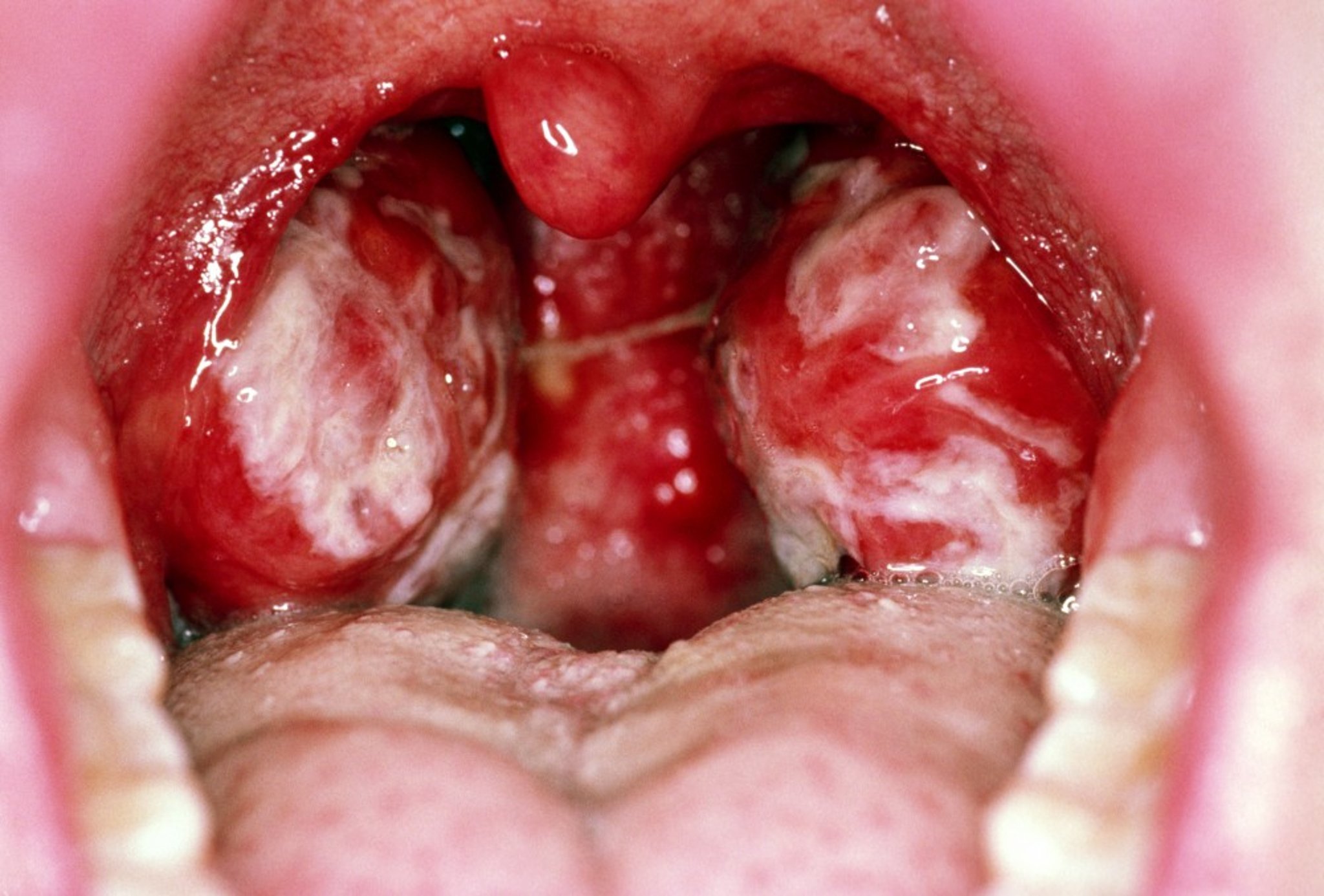
This photo shows swollen and pus-covered tonsils in a patient with infectious mononucleosis.
DR P. MARAZZI/SCIENCE PHOTO LIBRARY

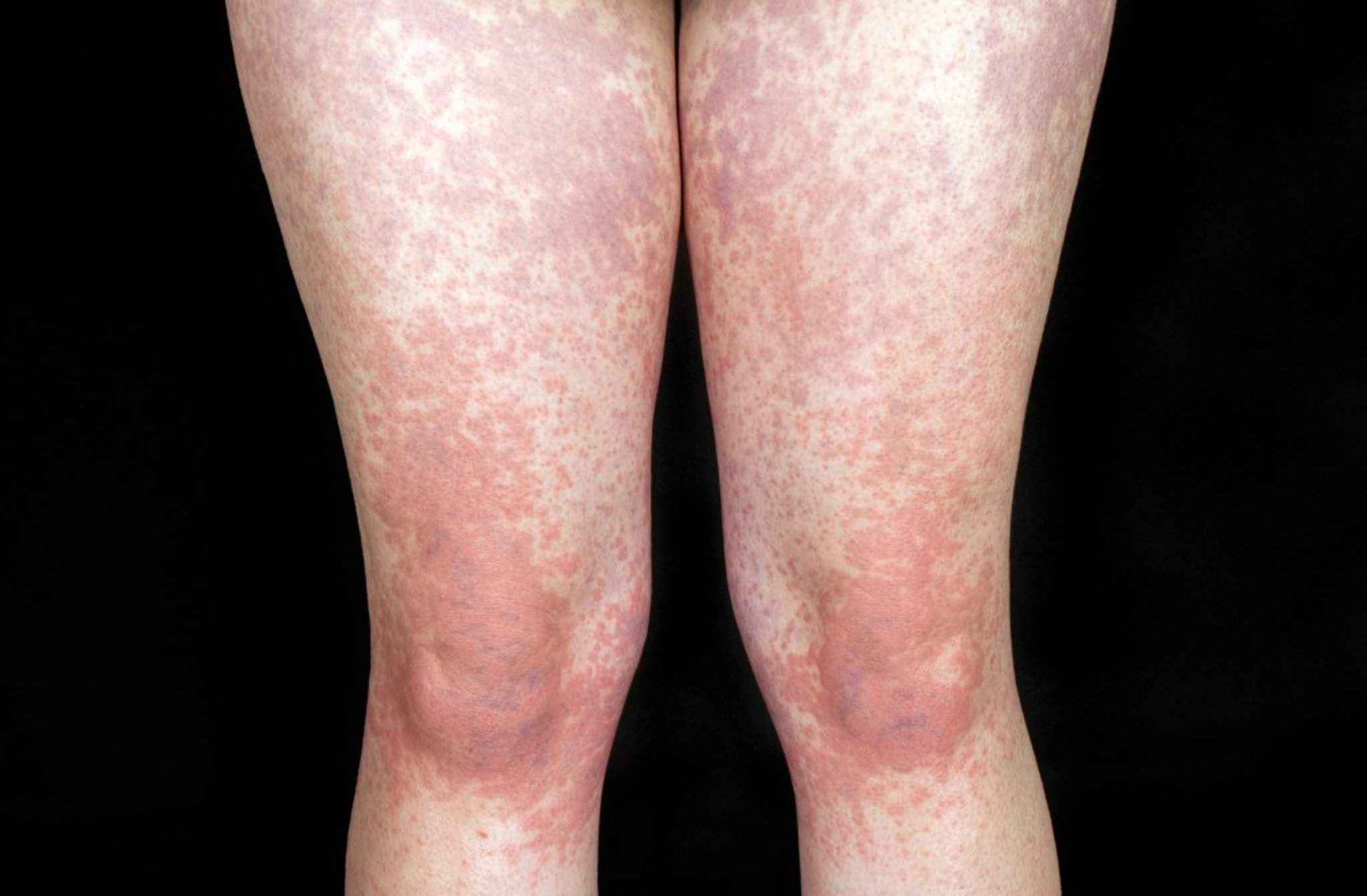
This photo shows diffuse maculopapular rash in a patient with infectious mononucleosis.
MID ESSEX HOSPITAL SERVICES NHS TRUST/SCIENCE PHOTO LIBRARY
Adenopathy is usually symmetric and may involve any group of nodes, particularly the anterior and posterior cervical chains. Adenopathy may sometimes be the only manifestation.
Other symptoms and signs include
Splenomegaly
Mild hepatomegaly and hepatic percussion tenderness
Periorbital edema and palatal petechiae
Less frequently maculopapular eruptions
Rarely jaundice
Splenomegaly, which occurs in about 50% of cases (2), is maximal during the second and third week and usually results in only a barely palpable splenic tip.
Rash historically was felt to be rare, but to commonly occur upon administration of antibiotics, particularly ampicillin, although such a rash did not necessarily predict future intolerance to ampicillin. However, more recent data suggest rash may occur more commonly, in up to ~20% of individuals, and that antibiotic administration may not further increase the incidence of rash (2).
Differential diagnosis
Primary HIV infection can produce a clinical picture resembling acute EBV infection.
Cytomegalovirus (CMV) may also cause a mononucleosis syndrome, with atypical lymphocytosis as well as splenomegaly and hepatitis but usually not with severe pharyngitis.
Toxoplasmosis may cause an infectious mononucleosis syndrome with fever and lymphadenopathy but usually not with pharyngitis.
Streptococcal pharyngitis can mimic infectious mononucleosis.
Hepatitis A, B, or C can also cause elevated liver function tests (though typically much higher levels than in EBV infection) and atypical lymphocytes
Pearls & Pitfalls
|
Complications
Although recovery is usually complete, complications may be dramatic.
Neurologic complications are rare but may include encephalitis, seizures, Guillain-Barré syndrome, peripheral neuropathy, viral meningitis, myelitis, cranial nerve palsies, and psychosis. Encephalitis may manifest with cerebellar dysfunction, or it may be global and rapidly progressive, similar to herpes simplex encephalitis, but is usually self-limited.
Hematologic complications are usually self-limited. They include
Granulocytopenia
Thrombocytopenia
Hemolytic anemia
Transient mild granulocytopenia or thrombocytopenia occurs in 50% of patients (2, 3); severe cases with bacterial infection or bleeding occur less frequently. Hemolytic anemia is often due to anti-i-specific cold-agglutinin antibodies.
Splenic rupture can have severe consequences. It can result from splenic enlargement and capsular swelling, which are maximal 10 to 21 days after presentation. A history of trauma is present only about half of the time. Rupture is usually painful but occasionally causes painless hypotension. (For treatment, see Splenic Injury.)
Respiratory complications include, rarely, upper airway obstruction due to pharyngeal or paratracheal lymphadenopathy; respiratory complications may respond rapidly to glucocorticoids.
Hepatic complications include elevated aminotransferase levels (about 2 to 3 times normal, returning to baseline over 3 to 4 weeks); they occur in about 90% of patients (1). If jaundice or more severe enzyme elevations occur, other causes of hepatitis should be investigated.
Overwhelming infection with EBV occurs sporadically but may cluster in families, particularly those with X-linked lymphoproliferative syndrome. Survivors of overwhelming primary EBV infection with lymphoproliferative syndrome are at risk of developing agammaglobulinemia or lymphoma.
Symptoms and signs references
1. Dunmire SK, Grimm JM, Schmeling DO, Balfour HH Jr, Hogquist KA. The Incubation Period of Primary Epstein-Barr Virus Infection: Viral Dynamics and Immunologic Events. PLoS Pathog. 2015;11(12):e1005286. Published 2015 Dec 1. doi:10.1371/journal.ppat.1005286
2. Johannsen EC, Kaye KM. Epstein-Barr Virus (Infectious Mononucleosis, Epstein-Barr Virus–Associated Malignant Diseases, and Other Diseases). In: Blaser M, Cohen JI, Holland SM, Doi Y, Falsey AR, Garrett WS, Marr KA, Mitre E, Wiilson E, eds. Mandell, Douglas, and Bennett's Principles and Practice of Infectious Diseases. 10th ed, Elsevier Saunders, 2026:1844–861.
3. Luzuriaga K, Sullivan JL. Infectious mononucleosis. N Engl J Med. 2010;362(21):1993-2000. doi:10.1056/NEJMcp1001116
Diagnosis of Infectious Mononucleosis
Heterophile antibody test
EBV-specific serologic testing
Additional tests for excluding other infections
Infectious mononucleosis should be suspected in patients with typical symptoms and signs (1). Exudative pharyngitis, anterior cervical lymphadenopathy, and fever may be clinically indistinguishable from those caused by group A beta-hemolytic streptococci. However, posterior cervical or generalized adenopathy or hepatosplenomegaly suggests infectious mononucleosis. Moreover, detection of streptococci in the oropharynx does not exclude infectious mononucleosis.
If patients have risk factors (eg, sexual activity, possible parenteral exposure) for HIV infection, the following should be done:
Quantitative HIV RNA viral load in blood
Combination antibody immunoassay and p24 antigen assay
HIV enzyme-linked immunosorbent assay (ELISA)/Western blot is usually negative during the acute infection and thus should not be used alone to diagnose early primary HIV infection. Quantitative HIV RNA and p24 antigen detection are more sensitive for diagnosing acute HIV infection because HIV RNA and p24 antigen are present in the blood before HIV antibodies develop.
Laboratory tests
Laboratory diagnosis usually involves a complete blood count and EBV serologic testing. Lymphocytes that are morphologically atypical account for up to 30% of the white blood cells (2). Although individual lymphocytes may resemble leukemic lymphocytes, lymphocytes are heterogeneous, which is unlikely in leukemia. Atypical lymphocytes may also be present in HIV or CMV infection, hepatitis B, influenza B, rubella, or other viral illnesses, so diagnosis requires confirmation that is typically achieved with serologic testing. It is important to note that very high atypical lymphocyte counts are typically seen only in primary EBV and CMV infections.
Two serologic tests are used to diagnose acute EBV infection:
Heterophile antibody testing
Specific EBV antibody testing
Heterophile antibodies are measured using various agglutination card (monospot) tests. However, heterophile antibodies are present in only 50% of patients aged 2 to 5 years and in between 85 to 90% of adolescents and adults with infectious mononucleosis (3). Importantly, the heterophile antibody test may be false-positive in some patients with acute HIV infection. The titer and prevalence of heterophile antibodies rise during the second and third week of illness. Thus, if the diagnosis is suspected and the heterophile antibody test is negative early in clinical illness (in the first week), testing can be repeated approximately 7 days later. Due to the potential for false positive or negative results, the Centers for Disease Control and Prevention (CDC) does not recommend heterophile antibodies to diagnose primary EBV infection (4). However, a positive heterophile antibody test in the appropriate clinical situation is generally sufficient to confirm the diagnosis of primary EBV. Alternatively, EBV antibody testing can be performed.
EBV-specific antibody testing is highly sensitive. If EBV antibody titers are negative or indicate remote infection (ie, positive for IgG antibodies and negative for IgM antibodies), other diagnoses that can present with similar symptoms (eg, acute HIV infection, CMV infection) should be considered.
Tests for antibodies to specific EBV antigens are available: Viral capsid antigen ([VCA], both IgG and IgM); early antigen (EA, IgG); and EBV nuclear antigen (EBNA, IgG). These are interpreted as follows (4):
IgM antibodies to the VCA indicates primary EBV infection (these antibodies disappear within 3 months after infection).
IgG VCA (EBV VCA-IgG) also develops early in primary EBV infection, but these antibodies persist for life.
IgG anti-EA appears in the acute phase of illness and generally falls to undetectable levels after 3 to 6 months
EBV nuclear antigen (EBNA-IgG) antibodies develop later (after 2 to 4 months) in acute EBV infection and also persist for life.
Diagnosis references
1. Miller JM, Binnicker MJ, Campbell S, et al. Guide to Utilization of the Microbiology Laboratory for Diagnosis of Infectious Diseases: 2024 Update by the Infectious Diseases Society of America (IDSA) and the American Society for Microbiology (ASM). Clin Infect Dis. Published online March 5, 2024. doi:10.1093/cid/ciae104
2. Ebell MH, Call M, Shinholser J, Gardner J. Does This Patient Have Infectious Mononucleosis?: The Rational Clinical Examination Systematic Review. JAMA. 2016;315(14):1502-1509. doi:10.1001/jama.2016.2111
3. De Paschale M, Clerici P. Serological diagnosis of Epstein-Barr virus infection: Problems and solutions. World J Virol. 2012;1(1):31-43. doi:10.5501/wjv.v1.i1.31
4. Centers for Disease Control and Preventionp. Estein–Barr Virus and Infectious Mononucleosis. . Laboratory Testing for Epstein-Barr Virus (EBV). April 10 2024. Accessed October 17, 2025.
Treatment of Infectious Mononucleosis
Supportive care
Glucocorticoids possibly helpful for severe disease
Treatment of infectious mononucleosis is supportive. Patients are encouraged to rest during the acute phase but can resume activity when fever, pharyngitis, and malaise abate. To prevent splenic rupture, patients should avoid heavy lifting and contact sports for 1 month after presentation and until splenomegaly (which can be monitored by ultrasound) resolves.
Although glucocorticoids hasten defervescence and relieve pharyngitis, they generally should not be used in uncomplicated disease. Glucocorticoids can be helpful for complications such as impending airway obstruction, severe thrombocytopenia, and hemolytic anemia. Although oral or IV acyclovir decreases oropharyngeal shedding of EBV, there is no convincing evidence to warrant its clinical use in EBV mononucleosis.
Prognosis for Infectious Mononucleosis
Infectious mononucleosis is usually self-limited. Duration of illness varies; the acute phase lasts about 2 weeks. Generally, many patients can return to school or work within 2 weeks. Fatigue may persist for several more weeks or, in up to 10% of cases, for months.
Mortality is very rare, mostly resulting from complications (eg, encephalitis, splenic rupture, airway obstruction).
Key Points
EBV infection is very common; the virus remains within the host for life and is intermittently and asymptomatically shed from the oropharynx.
Only about 5% of patients acquire EBV from someone who has acute infection.
Typical manifestations include fatigue (sometimes persisting weeks or months), fever, pharyngitis, splenomegaly, and lymphadenopathy.
Uncommon severe complications include encephalitis and other neurologic manifestations, splenic rupture, airway obstruction due to tonsillar enlargement, hemolytic anemia, thrombocytopenia, and jaundice.
A positive heterophile antibody test or specific EBV antibody test is helpful in the appropriate clinical situation.
Primary HIV infection can have a clinical presentation similar to acute EBV; therefore, HIV testing should be done in patients at risk of HIV infection.
Provide supportive care and recommend avoidance of heavy lifting and contact sports; antivirals are not indicated.
Consider glucocorticoids for complications such as impending airway obstruction, severe thrombocytopenia, and hemolytic anemia.
Drug Information for the Topic