Hiatus hernia is an abnormal bulging of a portion of the stomach through the diaphragm.
The cause of this disorder usually is not known
Some people have no symptoms or minor ones such as reflux and indigestion, whereas others have more serious symptoms such as chest pain, bloating, belching, and difficulty swallowing.
The diagnosis is based on results of barium swallow x-rays, upper endoscopy, or esophageal manometry.
Treatment, when necessary, is aimed at relieving symptoms, sometimes by using medications and sometimes by doing surgery.
The esophagus is the hollow tube that leads from the throat (pharynx) to the stomach.
Bulging (herniating) of any structure in the abdomen through the diaphragm (the sheet of muscle that separates the chest cavity from the abdomen) is called a diaphragmatic hernia. The diaphragm has an opening that the esophagus normally passes through called the hiatus. A diaphragmatic hernia that occurs through this opening is called a hiatus hernia.
Causes of Hiatus Hernia
The cause of hiatus hernia is usually unknown, but it may be caused by stretching of the bands of tissue that are attached between the esophagus and diaphragm at the hiatus.
Other types of diaphragmatic hernia may result from a birth defect or from an injury.
Types of Hiatus Hernia
There are 2 main types of hiatus hernia:
Sliding hiatus hernia (most common)
Paraesophageal hiatus hernia
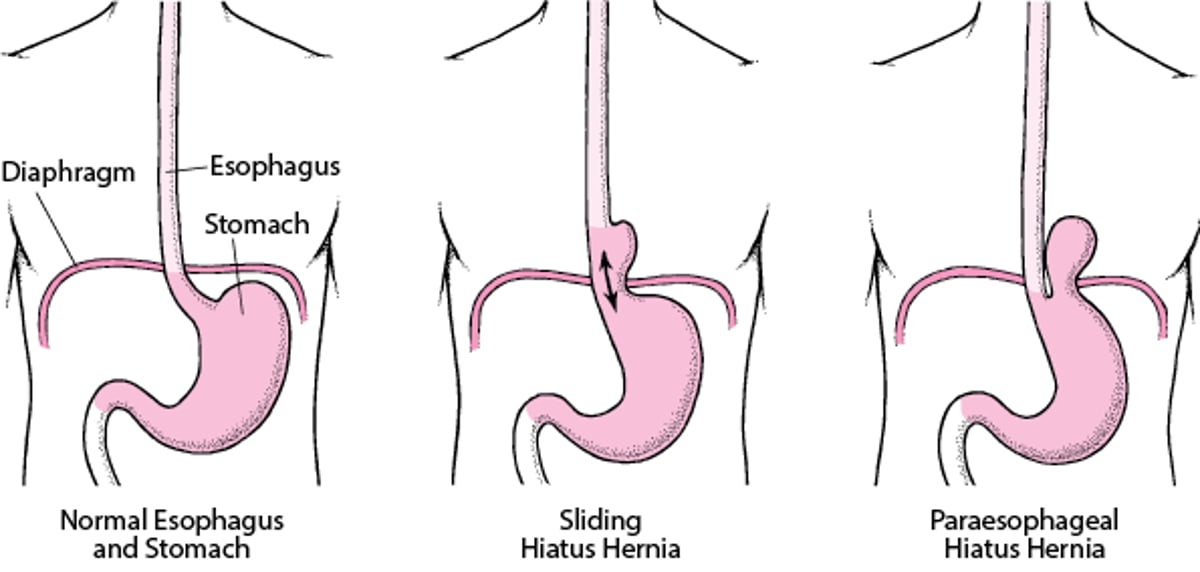
In a sliding hiatus hernia, the junction between the esophagus and the stomach as well as a portion of the stomach itself, all of which are normally below the diaphragm, bulge above it.
In a paraesophageal hiatus hernia, the junction between the esophagus and stomach is in its normal place below the diaphragm, but a portion of the stomach is pushed above the diaphragm and lies beside the esophagus.
Understanding Hiatus Hernia
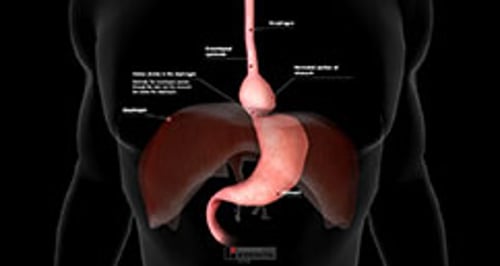
A hiatus hernia is an abnormal bulging of a portion of the stomach through the diaphragm. |

Symptoms of Hiatus Hernia
Most sliding hiatus hernias are very small, and most people with a sliding hiatus hernia have no symptoms. Symptoms that do occur are usually minor. They are usually related to gastroesophageal reflux and include indigestion, typically when a person lies down after eating. About two-thirds of people with hiatus hernia have gastroesophageal reflux disease, and nearly all people with gastroesophageal reflux disease have at least a small hiatal hernia. Leaning forward, straining, and lifting heavy objects make symptoms worse, as does pregnancy.
A paraesophageal hiatus hernia typically causes no symptoms but may get trapped or pinched by the diaphragm and lose its blood supply. This serious and painful condition, called strangulation, requires immediate surgery. Symptoms may include chest pain, bloating, belching, and difficulty swallowing.
Rarely, microscopic or massive bleeding from the lining of the hernia occurs with either type of hiatus hernia.
Diagnosis of Hiatus Hernia
Barium swallow x-rays
Sometimes upper endoscopy
Sometimes esophageal manometry
People are given barium in a liquid and then x-rays are taken (barium swallow). The barium outlines the esophagus, making abnormalities easier to see.
Hernias can also be seen during an upper endoscopy. During upper endoscopy, doctors examine the esophagus by using a flexible tube called an endoscope.
Sometimes esophageal manometry may be used as a complementary test to improve sensitivity of either barium swallow or endoscopy.
Doctors may also discover a hiatus hernia on a chest x-ray or CT scan taken for other reasons.
Treatment of Hiatus Hernia
Measures to prevent or treat acid reflux
Sometimes a proton pump inhibitor (PPI)
Sometimes surgery
Sliding hiatus hernias that do not cause symptoms do not require treatment. If symptoms of reflux occur, doctors may recommend measures for treating reflux, including a proton pump inhibitor(which reduces acid production), elevating the head of the bed while sleeping, not eating before bedtime, losing excess weight, and stopping smoking.
A paraesophageal hiatus hernia that causes symptoms should be corrected surgically to prevent strangulation. Surgery may be done through a tiny incision in the chest or abdomen through which thin instruments and a small video camera are inserted (thoracoscopic or laparoscopic surgery) or may require a full open operation.