People with diabetes mellitus have many serious long-term complications that affect many areas of the body, particularly the blood vessels, nerves, eyes, and kidneys.
(See also Overview of Diabetes Mellitus, Type 1 Diabetes - Complications, and Type 2 Diabetes - Complications.)
People with diabetes mellitus may experience many serious, long-term complications, primarily because of the increased level of glucose (sugar) in the blood. Some of these complications begin within months of the onset of diabetes, although most tend to develop after a few years. Most of the complications gradually worsen. In people with diabetes, strictly controlling the level of glucose in the blood makes these complications less likely to develop or worsen.
Because type 2 diabetes may be present for some time before it is diagnosed, complications in type 2 diabetes may be more serious or more advanced when they are discovered.


Image Copyright © Nucleus Medical Media. All rights reserved.
Causes of Diabetes Complications
Most complications of diabetes are the result of problems with blood vessels. Glucose levels that remain high over a long time cause both the small and large blood vessels to narrow. The narrowing reduces blood flow to many parts of the body, leading to problems. There are several causes of blood vessel narrowing:
Complex sugar-based substances build up in the walls of small blood vessels, causing them to thicken and leak.
Poor control of blood glucose levels causes the levels of fatty substances in the blood to rise, resulting in atherosclerosis and decreased blood flow in the larger blood vessels.
Types of Diabetes Complications
Over time, thickening and narrowing of blood vessels can harm the eyes, kidneys (chronic kidney disease), nerves (neuropathy), skin, heart (angina, heart failure), brain (stroke), and legs (peripheral artery disease with leg pain while walking). People with diabetes are also more prone to infections. People with type 2 diabetes may also develop liver damage.
Eye problems in diabetes
Damage to the blood vessels of the eye can cause loss of vision (diabetic retinopathy). Laser surgery can seal the leaking blood vessels of the eye and prevent permanent damage to the retina. Sometimes, other forms of surgery or injectable medications may be used. Therefore, people with diabetes should have yearly eye examinations to check for early signs of damage.
Kidney damage in diabetes
The kidneys can malfunction, resulting in chronic kidney disease that may require dialysis or kidney transplantation. Doctors usually check the urine of people with diabetes for abnormally high levels of protein (albumin), which is an early sign of kidney damage. At the earliest sign of kidney complications, people are often given medications that slow the progression of kidney damage, for example angiotensin-converting enzyme (ACE) inhibitors or angiotensin II receptor blockers (ARBs), sodium-glucose co-transporter-2 (SGLT2) inhibitors, and glucagon-like peptide-1 (GLP-1) receptor agonists.
Nerve damage in diabetes


Damage to nerves can manifest in several ways. If a single nerve malfunctions, an arm or leg may suddenly become weak. If the nerves to the hands, legs, and feet become damaged (diabetic polyneuropathy), sensation may become abnormal, and tingling or burning pain and weakness in the arms and legs may develop. Damage to the nerves of the skin makes repeated injuries more likely because people cannot sense changes in pressure or temperature.
Foot problems in diabetes
Diabetes causes many changes in the body. The following changes in the feet are common and difficult to treat:
Damage to the nerves (neuropathy) affects sensation to the feet, so that pain is not felt. Irritation and other forms of injury may go unnoticed. An injury may wear through the skin before any pain is felt.
Changes in sensation alter the way people with diabetes carry weight on their feet, concentrating weight in certain areas so that calluses form. Calluses (and dry skin) increase the risk of skin breakdown.
Diabetes can cause poor circulation in the feet, making ulcers more likely to form when the skin is damaged and making the ulcers slower to heal.
Because diabetes can affect the body’s ability to fight infections, a foot ulcer, once it forms, easily becomes infected. Because of neuropathy, people may not feel discomfort due to the infection until it becomes serious and difficult to treat, leading to gangrene. People with diabetes are more than 30 times more likely to require amputation of a foot or leg than are people without diabetes.

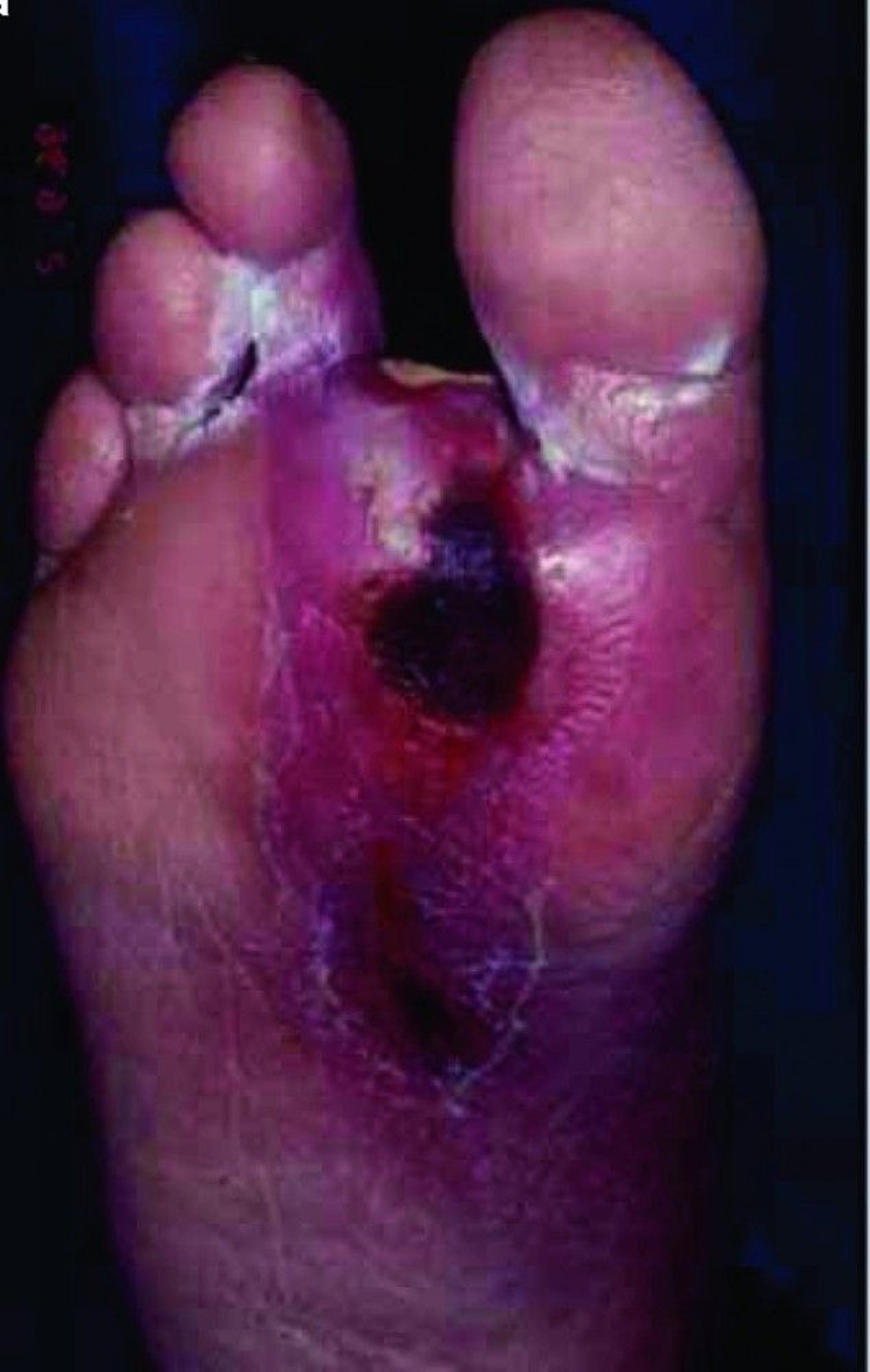
In this photo, a large ulcer is seen on the sole of the foot. People with diabetes are particularly likely to have ulcers of the feet and legs.
© Springer Science+Business Media
Complications of large blood vessels in diabetes
Atherosclerosis of large blood vessels in the heart, brain, and legs leads to heart attacks, strokes, and peripheral artery disease. Atherosclerosis tends to occur at a younger age in people with diabetes than in people who do not have diabetes.
Heart failure and cardiomyopathy in diabetes

Diabetic cardiomyopathy is thought to result from many factors, including epicardial atherosclerosis, high blood pressure, and left ventricular hypertrophy, microvascular disease, endothelial and autonomic dysfunction, obesity, and metabolic disturbances. People develop heart failure due to impairment in left ventricular systolic and diastolic function and are more likely to develop heart failure after a heart attack (myocardial infarction).
People with type 2 diabetes and heart failure, either with reduced or preserved ejection fraction should be treated with a sodium-glucose co-transporter 2 (SGLT2) inhibitor. Those with symptomatic heart failure with preserved ejection fraction and obesity may also receive a glucagon-like peptide 1 (GLP-1) receptor agonist.
Infections in diabetes
People with diabetes often develop bacterial and fungal infections typically of the skin and mouth. When the levels of glucose in the blood are high, white blood cells cannot effectively fight infections. Any infection that develops tends to be more severe and takes longer to resolve in people with diabetes. Sometimes, an infection is the first sign of diabetes.
One such infection is a yeast infection called candidiasis. Candida yeast is a normal resident of the mouth, digestive tract, and vagina that usually causes no harm. In people with diabetes, however, Candida can overgrow on mucous membranes and moist areas of the skin causing rashes in those areas.
People with diabetes are also particularly likely to have ulcers and infections of the feet and legs because of poor circulation to the skin. Too often, these wounds heal slowly or not at all. When wounds do not heal, they typically become infected and this can result in gangrene (tissue death) and bone infection (osteomyelitis). Amputation of the foot or part of the leg may be needed.
Liver damage in diabetes
It is common for people with type 2 diabetes to also have steatotic liver disease (formerly called fatty liver disease), in which abnormal fat deposits collect in the liver. Steatotic liver disease can sometimes progress to more serious liver disease including cirrhosis. Doctors diagnose liver problems if the results of blood tests that measure how well the liver is functioning or imaging of the liver is abnormal, and they confirm the diagnosis with a liver biopsy. Losing weight, maintaining good control of blood sugar levels, and treating high cholesterol can be helpful.
Complications of Diabetes
Tissue or Organ Affected | Effects | Complications |
|---|---|---|
Blood vessels | Fatty material (atherosclerotic plaque) builds up and blocks large or medium-sized arteries in the heart, brain, legs, and penis. The walls of small blood vessels are damaged so that the vessels do not transfer oxygen to tissues normally, and the vessels may leak. | Poor circulation causes wounds to heal poorly and can lead to heart attacks, strokes, gangrene of the feet and hands, erectile dysfunction, and infections. |
Eyes | The small blood vessels of the retina are damaged, leading to formation of new fragile blood vessels that tend to bleed. | Vision decreases, and ultimately, blindness occurs. |
Kidneys | The small blood vessels in the kidneys thicken. Protein leaks into urine. Blood is not filtered normally. | The kidneys malfunction, and ultimately, chronic kidney disease occurs. |
Liver | Abnormal fat deposits collect in the liver. | Liver fibrosis (scarring) can build up and lead to liver cirrhosis, a chronic disease that impairs liver function |
Peripheral nerves | Nerves are damaged because glucose is not used normally and because the blood supply is inadequate. | Legs suddenly or gradually weaken. People have reduced sensation, tingling, and pain in their hands and feet. |
The nerves that control internal body processes such as blood pressure and digestion are damaged. | Swings in blood pressure occur, and blood pressure can fall when the person stands. Swallowing becomes difficult. Digestive function is altered, and sometimes nausea or bouts of diarrhea occur. Erectile dysfunction develops. | |
Skin | Blood flow to the skin is reduced, and sensation is decreased, resulting in repeated injury. | Sores and deep infections (diabetic ulcers) develop. Healing is poor. |
Blood | White blood cell function is impaired. | People become more susceptible to infections, especially of the urinary tract and skin. |
Connective tissue | Glucose is not used normally, causing tissues to thicken or contract. | Carpal tunnel syndrome and Dupuytren contracture develop. |
Monitoring and Preventing Diabetes Complications
At the time of diagnosis and then at least yearly, people with type 2 diabetes are monitored for the presence of diabetes complications, such as kidney, eye, and nerve damage. In people with type 1 diabetes, doctors begin monitoring for complications 5 years after diagnosis. Typical screening tests include the following:
Foot examination to test sensation and look for signs of poor circulation (ulcers, hair loss)
Eye examination (done by an eye specialist)
Urine and blood tests of kidney function
Blood pressure measurement
Blood tests to evaluate for liver disease (in type 2 diabetes)
Blood tests for cholesterol levels
Sometimes an electrocardiogram or other cardiac testing
Worsening of complications can be prevented or delayed by strict blood glucose control or by early treatment with medication. Risk factors for heart problems, such as increased blood pressure and high cholesterol levels, are evaluated at each doctor visit and are treated with medication if necessary.
Proper care of feet and regular eye examinations can help prevent or delay the onset of complications of diabetes.
All people with diabetes should be receive recommended vaccines, including those against Streptococcus pneumoniae, influenza, hepatitis B, varicella, respiratory syncytial virus, and COVID-19.
Treatment of high blood pressure and high cholesterol levels, which can contribute to circulation problems, can help prevent some of the complications of diabetes as well. People with diabetes who are between 40 and 75 years are given a statin therapy to lower cholesterol levels and lower cardiovascular risk. People younger than 40 or older than 75 years and with an elevated risk of heart disease also should take a statin.
Another common problem in people with diabetes is gum disease (gingivitis), and regular visits to the dentist for cleaning and preventive care are important.
Did You Know...
|
Prevention of hypoglycemia
One of the challenges of trying to strictly control the levels of glucose in the blood is that low blood glucose levels (hypoglycemia) may occur with some commonly used antihyperglycemic medications (such as insulin or sulfonylureas [for example, glyburide, glipizide, and glimepiride]). Recognizing the presence of low blood glucose is important because treatment of hypoglycemia is an emergency. Symptoms may include hunger pangs, racing heartbeat, shakiness, sweating, and inability to think clearly.
If hypoglycemia is very severe, sugar must get into the body quickly to prevent permanent harm and relieve symptoms. Most of the time, people can eat sugar. Almost any form of sugar will do, although glucose works more quickly than table sugar (typical table sugar is sucrose). Many people with diabetes carry glucose tablets or glucose gel packs. Other options are to drink a glass of milk (which contains lactose, a type of sugar), sugar water, or fruit juice or to eat a piece of cake, some fruit, or another sweet food. In more serious situations, it may be necessary for emergency medical professionals to inject glucose into a vein.
Another treatment for hypoglycemia involves the use of glucagon. Glucagon can be injected into a muscle or inhaled as a nasal powder and causes the liver to release large amounts of glucose within minutes. Small transportable kits containing a syringe or autoinjector pen filled with glucagon are available for people who frequently have episodes of low blood glucose to use in emergency situations when sugar cannot be ingested by mouth.
More Information
The following English-language resources may be useful. Please note that The Manual is not responsible for the content of the resources.
American Diabetes Association: Comprehensive information on diabetes, including resources for living with diabetes
Breakthrough TD1 (previously called JDRF, or Juvenile Diabetes Research Foundation): General information on type 1 diabetes mellitus
National Institute of Diabetes and Digestive and Kidney Diseases: General information on diabetes, including on the latest research and community outreach programs
Drug Information for the Topic