Sexually transmitted infections (STIs) spread through blood, semen, vaginal fluids, other body fluids, or skin-to-skin contact during oral, anal, or genital sex with an infected partner.
Sexually transmitted infections may be caused by bacteria, viruses, or parasites.
Some infections can spread to other parts of the body, sometimes with serious consequences.
Symptoms vary and may include itching, a discharge from the penis or the vagina, pain during urination or sex, or visible rashes or sores.
The diagnosis is based on a physical examination and on the results of laboratory tests.
Most sexually transmitted infections can be effectively treated with medications.
Using condoms or other barrier methods during sex or, for some people, taking preventive medications before and/or after sex can help prevent spreading these infections from one person to another.
Sexually transmitted infections (STIs) are relatively common around the world. Worldwide in 2020, there were an estimated 374 million new cases of STIs in people 15 to 49 years old. In the United States in 2018, about 26 million new cases of STIs occurred, and about half of those new cases occurred in people 15 to 24 years old.
Causes of STIs
STIs can be caused by a number of bacteria, viruses, and parasites that vary widely in size, life cycle, and the diseases and symptoms they cause.
Causes of Sexually Transmitted Infections
Cause | Infection |
|---|---|
Bacteria | |
Viruses | Hepatitis A and hepatitis C* Human papillomavirus (HPV) infection Human immunodeficiency virus (HIV) infection Molluscum contagiosum* (caused by a poxvirus) |
Parasites (protozoa) | |
Ectoparasites | Scabies* (due to burrowing mites) |
* These infections typically are not considered sexually transmitted infections (STIs) but can be spread by sexual contact (see Transmission of STIs). | |
Transmission of STIs
Sexual contact, including oral, anal, and genital sex, provides an opportunity for STIs to spread (be transmitted) from one person to another because it involves transfer of body fluids.
Sexual activity makes it easier for STIs to spread. Factors that can contribute to the transmission of STIs include:
Unprotected sexual activity with one or more partners
Lack of education about safer sex practices
Reluctance to talk about safer sex practices with a partner
Reluctance to talk about sexual issues with a health care professional
Lack of access to health care
Infection with no symptoms, so people do not know they need to be tested or treated
Retransmission of the STI from one partner back to the other when both partners are not treated at the same time
Incomplete treatment, which can lead to development of organisms that are resistant to medications
International travel when it involves sex with a new partner or partners or unprotected sex
Although STIs usually result from having vaginal, oral, or anal sex with an infected partner, penetration is not necessary to spread an STI. Some STIs can also be spread in other ways:
From mother to child during pregnancy or during birth: Syphilis, herpes, chlamydia, gonorrhea, human immunodeficiency virus (HIV) infection, hepatitis B, and human papillomavirus (HPV) infection
Breastfeeding (chestfeeding): HIV infection
Contaminated medical instruments: HIV infection
Some infections can be spread through sexual contact but are not typically considered STIs because they usually are spread in other ways. For example, hepatitis can be spread sexually, but hepatitis A is usually spread when people ingest the virus after touching an object or consuming food or drinks that are contaminated by the stool of an infected person, and hepatitis C is usually spread through contact with the blood of an infected person. Salmonella infections and Campylobacter infections also can be spread sexually, but they usually are spread when people eat or drink contaminated food or water or come in contact with infected animals. Shigellosis, giardiasis, and amebiasis are other infections that can be spread sexually but usually are spread in another way.
Pubic lice infestation, scabies, molluscum contagiosum, and mpox are other infections that can be spread through skin-to-skin contact, but they are considered STIs only when spread specifically through sexual contact.
Symptoms of STIs
Symptoms of STIs vary greatly, but the first symptoms usually involve or appear in the area where the organisms entered the body. For example, sores may form in the genital area or mouth. There may be itching and a discharge from the penis or the vagina, or urination or sex may be painful.

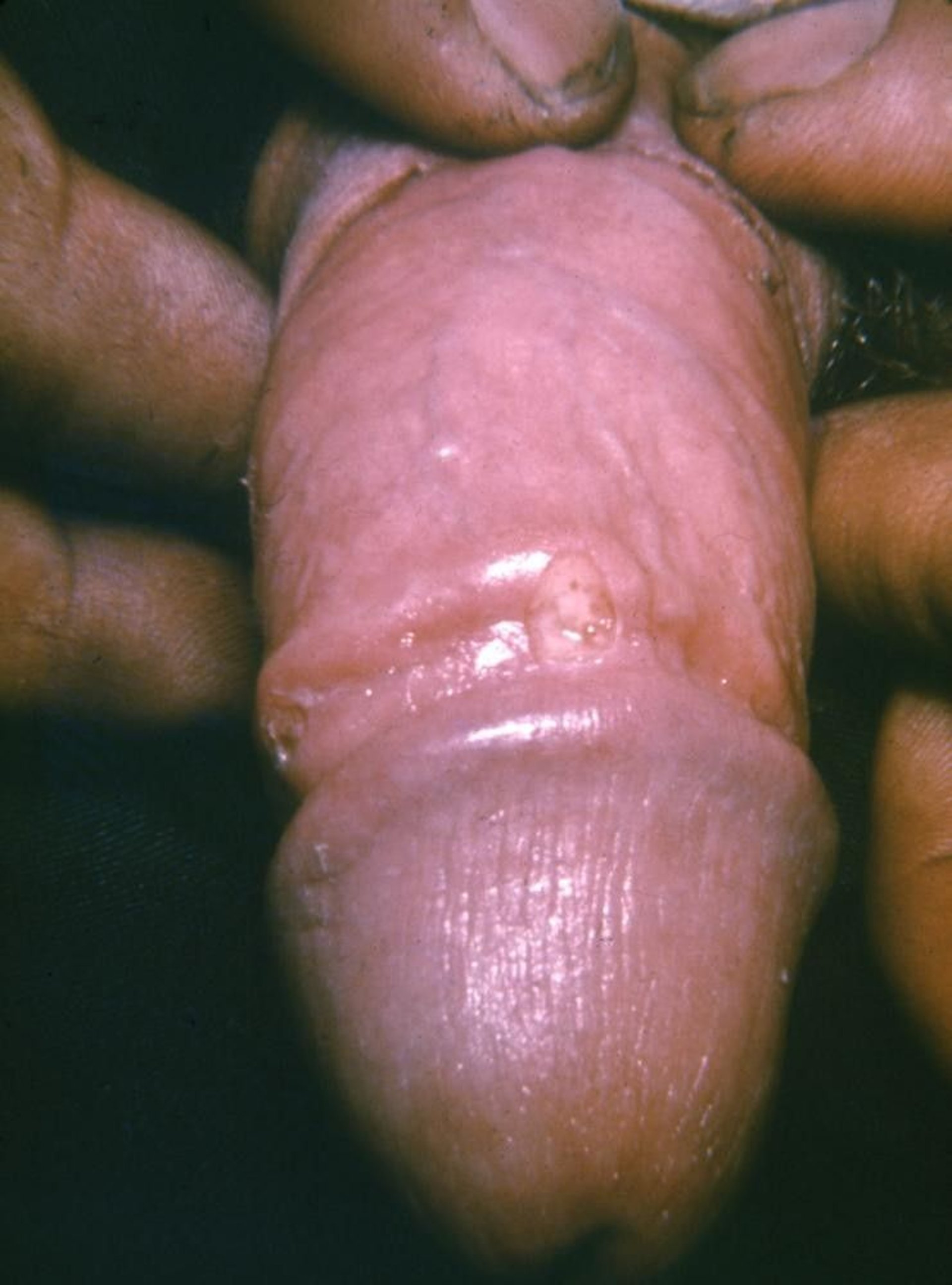
Several sexually transmitted infections, such as chancroid, can cause painful ulcers on the penis.
Image courtesy of Dr. Pirozzi via the Public Health Image Library of the Centers for Disease Control and Prevention.
Some of the symptoms caused by STIs increase the risk of getting other infections (such as HIV infection). For example, having inflamed, irritated skin (as occurs in gonorrhea or chlamydia) or sores (as occurs in herpes, syphilis, or chancroid) makes it easier for other infectious organisms to enter the body.
Complications of STIs
When STIs are not diagnosed and treated promptly, some organisms can spread through the bloodstream and infect internal organs, sometimes causing serious, even life-threatening problems. Such problems include
Heart and blood vessel infections and brain infections due to syphilis
Severe infections and rare cancers due to HIV infection
Cervical, vulvar, vaginal, anal, and throat cancer due to HPV infection
In women, some organisms that enter the vagina can infect other reproductive organs. The organisms can infect the cervix (the lower part of the uterus that forms the end of the vagina), enter the uterus, and reach the fallopian tubes and sometimes the ovaries. Damage to the fallopian tubes can result in infertility or a higher risk of a mislocated (ectopic) pregnancy. The infection may spread to the membrane that lines the abdominal cavity (peritoneum), causing peritonitis. Infections of the uterus, fallopian tubes, ovaries, and/or peritoneum are called pelvic inflammatory disease.
Pathway From the Vagina to the Ovaries
In women, some organisms can enter the vagina and infect other reproductive organs. From the vagina, these organisms can enter the cervix and uterus and may reach the fallopian tubes and sometimes the ovaries. |


In men, organisms that enter through the penis may infect the tube that carries urine from the bladder through the penis (urethra). Complications are uncommon if the infection is treated quickly, but chronic infection of the urethra can cause the following:
Tightening of the foreskin, so that it cannot be pulled over the head of the penis
Narrowing of the urethra, blocking the flow of urine
Development of an abnormal channel (fistula) between the urethra and the skin of the penis
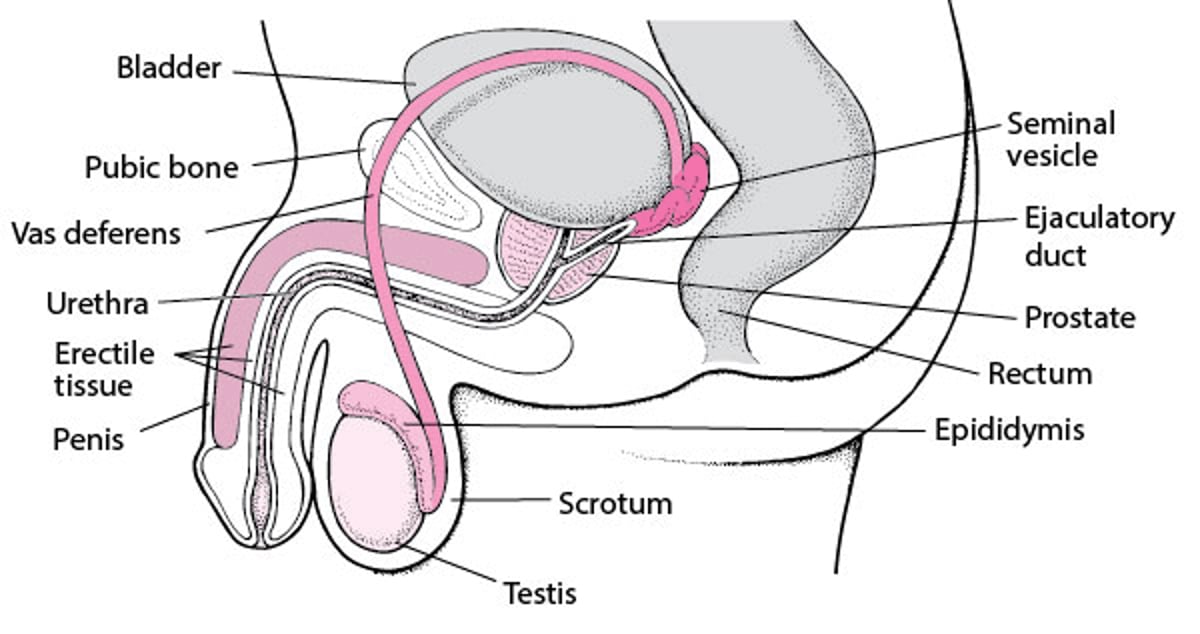
Occasionally in men, organisms spread up the urethra and travel through the tube that carries sperm from a testis (ejaculatory duct and vas deferens) to infect the epididymis (the coiled tube on top of each testis).
Pathway From the Penis to the Epididymis
Occasionally in men, organisms spread up the urethra and travel through the tube that carries sperm from the testis (vas deferens) to infect the epididymis at the top of a testis. |

In both men and women, some STIs can cause persistent swelling of the genital tissues or infection of the urethra (urethritis) or rectum (proctitis).
Diagnosis of STIs
A doctor's evaluation
Examination of a sample of blood, urine, or discharge
Doctors often suspect an STI based on a person's symptoms or on a history of a person's sexual contact with an infected partner.
To identify the organism involved and thus confirm the diagnosis, doctors may take a sample of blood, urine, or discharge from the vagina, cervix, or penis and examine it. The sample is usually sent to a laboratory for the organisms to be detected and identified; some tests for STIs can be done in the clinic.
Some tests for STIs are designed to identify the organism’s unique genetic material (DNA or RNA). Other tests check for the presence of antibodies that are produced by the immune system in response to the specific organism that is causing the infection. Doctors choose the type of test based on the most likely organism or organisms.
If a person has one STI, such as gonorrhea, doctors also do tests for other STIs, such as chlamydia, syphilis, and HIV infection. Doctors do these other tests because people who have one STI have a relatively high chance of having another one.
Screening for STIs
Screening refers to doing tests for an infection in people who do not have symptoms. Screening is best done when:
The infection being screened for is relatively common.
People have a higher than average risk of having the infection (such as people with more than one sex partner) or in whom the infection is particularly dangerous (such as pregnant people).
The screening test is easy and relatively inexpensive.
There is effective treatment for the infection.
Doctors recommend screening for STIs in all people who are at increased risk of infection with chlamydia, gonorrhea, syphilis, and HIV infection.
Treatment of STIs
Antibiotics or antiviral medications depending on the STI
If possible, simultaneous treatment of sex partners
Treatment of complications, if present
Most STIs can be effectively treated. Antibiotics are used to treat bacterial STIs, and antiviral medications are used to treat viral STIs. However, some new strains of bacteria and viruses have become resistant to some medications, making treatment more difficult. Resistance to medications is likely to increase because medications are sometimes misused.
People who are being treated for a bacterial STI should not have sexual intercourse or any sexual activity until they and their sex partners have been treated and the infection has been eliminated. After a person has been diagnosed with an STI, their sex partners should be tested and treated as soon as possible.
Viral STIs, especially genital herpes and HIV infection, usually persist for life. Antiviral medications can control but cannot yet cure these infections.
People who develop a complication resulting from an STI are treated based on the complication. For example, women who develop pelvic inflammatory disease are given antibiotics.
Prevention of STIs
People can do the following to help reduce their risk of STIs:
Practice safer sex, including using a condom every time for oral, anal, or genital sex.
Limit the number of sex partners and not have high-risk sex partners (people with many sex partners or who do not practice safer sex).
Practice mutual monogamy or abstinence.
Vaccinate (available for some STIs).
Seek prompt diagnosis and treatment to prevent spread to other people.
Identify sexual contacts if infected with an STI for the purposes of counseling and treatment.
Vaccines are available for HPV infection, hepatitis A, and hepatitis B.
People at high risk of HIV infection may take medications prior to being exposed to prevent becoming infected (see HIV: Preventive treatment before exposure).
Men who have sex with men and transgender women can reduce their risk of developing chlamydia, gonorrhea, and syphilis by taking the antibiotic doxycycline within 3 days of having sex without a condom.
Internal condoms, dental dams, and external condoms are nonmedical ways to prevent the spread of some STIs. These barrier methods of protection must be used correctly to be effective.
External condoms should be applied before penetration. Correct use involves the following:
Use a new condom for each act of sexual intercourse.
Use the correct size condom.
Carefully handle the condom to avoid damaging it with fingernails, teeth, or other sharp objects.
Put the condom on after the penis is erect and before any genital contact with the partner.
Determine which way the condom is rolled by placing it on the index finger and gently trying to unroll it but only a little bit. If it resists, turn it over, and try the other way. Then re-roll it.
Place the rolled condom over the tip of the erect penis.
Leave 1/2 inch at the tip of the condom to collect semen.
With one hand, squeeze trapped air out of the tip of the condom.
If uncircumcised, pull the foreskin back before unrolling the condom.
With the other hand, roll the condom over the penis to its base and smooth out any air bubbles.
Make sure that lubrication is adequate during intercourse.
With latex condoms, use only water-based lubricants. Oil-based lubricants (such as petroleum jelly, shortening, mineral oil, massage oils, body lotions, and cooking oil) can weaken latex and cause the condom to break.
Hold the condom firmly against the base of the penis during withdrawal, and withdraw the penis while it is still erect to prevent slippage.
More Information
The following English-language resource may be useful. Please note that The Manual is not responsible for the content of this resource.
Centers for Disease Control and Prevention (CDC): Sexually Transmitted Infections (STIs)
Drug Information for the Topic