Onychomycosis is a fungal infection of the nails.
(See also Overview of Nail Disorders.)
About 10% of people have onychomycosis, which most often affects the toenails rather than the fingernails. It is most prevalent among older people, particularly men, and people with poor circulation in the feet (peripheral arterial disease [see Foot Care]), diabetes (see Foot Problems in Diabetes), a weakened immune system (caused by a disorder or medication), athlete's foot, or nail dystrophies.
Onychomycosis returns often without adequate preventive treatment.
Causes of Onychomycosis
Most cases are caused by dermatophytes. Dermatophytes are molds (a type of fungus). The fungus can be acquired through contact with an infected person or through contact with a surface where the fungus is present, such as a bathroom floor.
Symptoms of Onychomycosis
Infected nails have an abnormal appearance but are not itchy or painful. In mild infections, the nails have patches of white or yellow discoloration. A chalky, white scale may slowly spread beneath the nail’s surface. In more severe infections, the nails thicken and appear deformed and discolored. They may detach from the nail bed (see Tumors of the Nails). Usually, debris from the infected nail collects under its free edge.

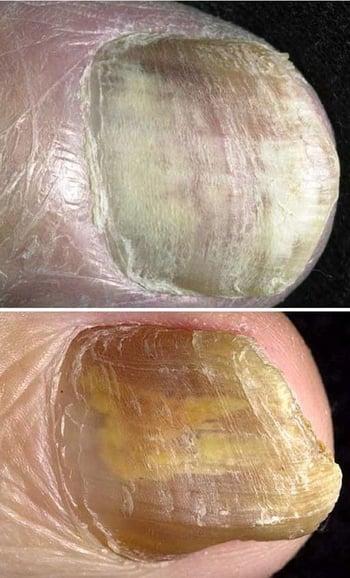
In the top photo, infection does not yet involve the entire nail plate (the hard part of the nail made of the protein keratin), and a chalky white scale is visible just beneath the nail surface. In the bottom photo, infection is more extensive and the nail is thickened, deformed, and yellow.
Diagnosis of Onychomycosis
A doctor's examination
Examination of nail debris or clippings


A doctor usually makes the diagnosis of onychomycosis based on the appearance of the nails. To confirm the diagnosis of onychomycosis, the doctor may need to examine a sample of the nail debris under a microscope and sometimes culture it to determine if a fungus is causing the infection. The doctor may also use scraping to perform a fungal culture or a test called polymerase chain reaction (PCR). The PCR test is used to produce many copies of a gene from the fungus, making the fungus much easier to identify. The doctor can also send a clipping that can be examined under the microscope by a dermatopathologist.
Treatment of Onychomycosis
Oral antifungal medications
Topical antifungal medications
These fungal infections can be treated effectively. People who have diabetes or peripheral vascular disease and onychomycosis are at risk of developing potentially serious infection of the skin and soft tissues in the feet and legs (called cellulitis).
Oral antifungal medications
If treatment is desired, the doctor usually needs to prescribe a medication taken by mouth (orally), such as terbinafine, fluconazole, or itraconazole or a topical medication. Typically, antifungal medications are taken for 3 months. However, even then the nail will not appear normal until new, healthy nail finishes growing out, which can take 12 to 18 months for toenails.
Topical treatments
Ciclopirox is an antifungal medication is an older topical medication with limited efficacy. It also requires that the nail is regularly trimmed and that the medication is removed once per week. Efinaconazole and tavaborole are newer topical antifungal medications. They are effective in children due to their thin and fast growing nails.
Foot care
To reduce the possibility of a recurrence, the nails should be kept trimmed short, the feet should be dried after bathing (including between the toes), absorbent socks should be worn, and antifungal foot powder or cream should be used. Old shoes may contain a high concentration of fungal spores and, if possible, should be sanitized with ultraviolet (UV) light or discarded.
Drug Information for the Topic