Cellulitis is a spreading bacterial infection of the skin and the tissues immediately beneath the skin.
This infection is most often caused by streptococci or staphylococci.
Redness, pain, and tenderness are felt over an area of skin, the skin often feels warm to the touch, and some people have a fever, chills, and other more serious symptoms.
The diagnosis is based on a doctor's evaluation and sometimes laboratory tests.
Antibiotics are needed to treat the infection.
(See also Overview of Bacterial Skin Infections.)
Causes of Cellulitis
Cellulitis is most commonly caused by Streptococcus and Staphylococcus aureus bacteria. Streptococci spread rapidly in the skin because they produce enzymes that hinder the ability of the tissue to confine the infection. Cellulitis that is caused by staphylococci usually occurs in open wounds and pus-filled pockets (skin abscesses).
Many other bacteria can cause cellulitis. A strain of Staphylococcus that is resistant to previously effective antibiotics has become a more common cause of cellulitis. This strain is called methicillin-resistant Staphylococcus aureus (MRSA). People who are exposed in a hospital or nursing facility commonly acquire a particular strain of MRSA that may respond differently to antibiotics than other strains of MRSA that are more common outside health care facilities.
Bacteria usually enter through small breaks in the skin that result from scrapes, punctures, surgery, burns, fungal infections (such as athlete's foot), animal bites, and skin disorders. Areas of the skin that become swollen with fluid (edema) are especially vulnerable. However, cellulitis can also occur in skin that is not obviously injured.
Certain types of bacteria can cause cellulitis when skin damaged by injuries (such as cuts) is immersed in contaminated water.
People whose immune system is weakened may be susceptible to bacteria that do not usually cause infections.
Symptoms of Cellulitis
Cellulitis commonly develops on the legs but may occur anywhere. It usually only affects one side of the body, such as one hand or one leg.
The first symptoms of cellulitis are redness, pain, and tenderness over an area of skin. These symptoms are caused both by the bacteria themselves and by the body’s attempts to fight the infection. The infected skin becomes hot and swollen and may look slightly pitted, like an orange peel. Fluid-filled blisters, which may be small (vesicles) or large (bullae), sometimes appear on the infected skin. The borders of the affected area are not distinct, except in a form of cellulitis called erysipelas.

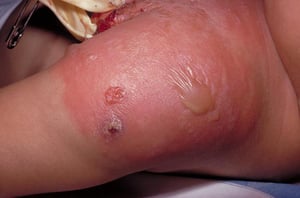
Cellulitis is characterized by red, warm areas on the skin. Sometimes blisters form.
Cellulitis is characterized by red, warm areas on the skin. Sometimes blisters form.
CDC/Allen W. Mathies


This photo shows distinct redness and swelling of the lower leg that are characteristic of cellulitis. The red streak extending up the thigh is called lymphangitis (infection of one or more lymphatic vessels). A health care professional (HCP) has marked the border of both infections with a pen to see whether the infection spreads or responds to treatment.
This photo shows distinct redness and swelling of the lower leg that are characteristic of cellulitis. The red streak e
© Springer Science+Business Media

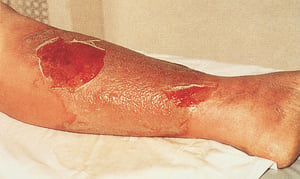
This photo shows redness and swelling of the lower leg that are characteristic of cellulitis. The infection has caused the overlying skin to peel off and the tissues to die.
This photo shows redness and swelling of the lower leg that are characteristic of cellulitis. The infection has caused
© Springer Science+Business Media
Cellulitis is characterized by red, warm areas on the skin. Sometimes blisters form.
Cellulitis is characterized by red, warm areas on the skin. Sometimes blisters form.
CDC/Allen W. Mathies
This photo shows distinct redness and swelling of the lower leg that are characteristic of cellulitis. The red streak extending up the thigh is called lymphangitis (infection of one or more lymphatic vessels). A health care professional (HCP) has marked the border of both infections with a pen to see whether the infection spreads or responds to treatment.
This photo shows distinct redness and swelling of the lower leg that are characteristic of cellulitis. The red streak e
© Springer Science+Business Media
This photo shows redness and swelling of the lower leg that are characteristic of cellulitis. The infection has caused the overlying skin to peel off and the tissues to die.
This photo shows redness and swelling of the lower leg that are characteristic of cellulitis. The infection has caused
© Springer Science+Business Media
Most people with cellulitis feel only mildly ill. Some may have a fever, chills, rapid heart rate, headache, low blood pressure, and confusion, which usually indicate a severe infection.
As the bacterial infection spreads, nearby lymph nodes may become enlarged and tender (lymphadenitis), and the lymphatic vessels may become inflamed (lymphangitis).
Diagnosis of Cellulitis
A doctor's evaluation
Sometimes blood and tissue cultures
A doctor usually diagnoses cellulitis based on its appearance and the person's symptoms.
Laboratory identification of the bacteria from skin, blood, or tissue specimens (called a culture) usually is not necessary unless a person is seriously ill or has a weakened immune system or unless the infection is not going away after the person is given antibiotics.


Sometimes, doctors need to do tests to differentiate cellulitis from a blood clot in the deep veins of the leg (deep vein thrombosis) because the symptoms of these disorders are somewhat similar.
Treatment of Cellulitis
Antibiotics
Drainage of any abscesses
Prompt treatment with antibiotics can prevent cellulitis from spreading rapidly and reaching the blood and internal organs. Antibiotics that are effective against both streptococci and staphylococci (such as dicloxacillin or cephalexin) are used.
Doctors give different antibiotics depending on the cause. For example, they give penicillin to people who have an animal bite and cefazolin or doxycycline to people who are exposed to contaminated water. If doctors suspect MRSA infection, they give antibiotics such as trimethoprim/sulfamethoxazole, linezolid, or doxycycline. All of these medications are given by mouth (orally).
People with rapidly spreading cellulitis, high fever, confirmed MRSA infection, or other symptoms of serious infection or who have not been helped by the oral antibiotics are hospitalized and given antibiotics by vein (intravenously).
Symptoms of cellulitis usually go away after a few days of antibiotics, but redness of the skin may persist even after the infection has been cured. Antibiotics may be continued for a long time in people who have a severe infection.
Abscesses are cut open (incised) and drained.
Affected parts of the body are kept immobile and elevated to help reduce swelling. Cool, wet dressings applied to the infected area help reduce pain. Compression stockings can help prevent repeat episodes of cellulitis in the legs.
Cellulitis can develop again in people who have risk factors such as athlete's foot, obesity, damage to leg veins that prevents blood from flowing normally (venous insufficiency), swelling (edema), and atopic dermatitis (eczema). Doctors identify and treat these disorders to decrease the likelihood of cellulitis developing again.
Prognosis for Cellulitis
Most cellulitis resolves quickly with antibiotic therapy. Occasionally, people develop skin abscesses. Serious but rare complications include severe skin infections that rapidly destroy tissue (called necrotizing skin infections) and spread of bacteria through the blood (bacteremia).
When cellulitis affects the same site repeatedly, especially the leg, lymphatic vessels may be damaged, causing permanent swelling of the affected tissue.
Drug Information for the Topic