Child maltreatment includes all types of abuse and neglect of a child under the age of 18 by a parent, caregiver, or another person in a custodial role that results in harm, potential for harm, or threat of harm to a child. Child neglect is the failure to meet a child’s basic physical and emotional needs. Child abuse is doing harmful things to a child.
Some factors that increase the risk of child abuse and neglect are parents who are young or single-parenting, have experienced child abuse or neglect themselves, or have personal or family stress (such as food insecurity, financial stress, intimate partner violence, social isolation, mental health issues, or a substance use disorder).
Children who are neglected or abused may appear tired or hungry, have poor hygiene, or have physical injuries or emotional or mental health issues, or they may have no obvious signs of abuse or neglect.
Abuse should be suspected when a pattern of injuries suggests that the injury was not accidental, when injuries do not match the caregiver's explanation, or when children are not developmentally able to do things that could result in their injury (such as an infant turning on a stove).
Children should be protected from further harm by means that may include counseling for caregivers and children, assistance for the family in providing safe and appropriate care and/or hospitalization. Involvement of child protective services is indicated; law enforcement agencies may also become involved.
Child maltreatment includes all types of abuse and neglect of a child under the age of 18 by anyone in a custodial role that results in harm, potential harm, or the threat of harm to a child.
Neglect involves not meeting children's basic needs: physical, medical, educational, and emotional.
Abuse can be physical, sexual, or emotional.
Child neglect and abuse often occur together and with other forms of family violence, such as intimate partner abuse.
Children may be neglected or abused by parents and other caregivers or relatives, people living in the child's home, or people who have occasional care responsibilities (such as teachers, coaches, and clergy).
Child maltreatment affects millions of children in the United States and hundreds of millions of children worldwide each year. Rates of child sexual abuse are higher for girls than for boys, while the rates of physical abuse are higher for boys than for girls. Many children are victimized at 2 years old or younger, when they are physically very vulnerable and unable to verbally defend themselves or ask for help.
Abuse or neglect may result in injury, illness, undernutrition, developmental delays, psychological issues, and even death. In addition to immediate harm, neglect and abuse increase the risk of long-lasting problems, including mental illness and substance use disorders. Child abuse is also associated with increased risk of health problems in adulthood such as obesity, heart disease, and chronic obstructive pulmonary disease (COPD).
In the United States, most reports of child maltreatment are made by professionals who are legally mandated to do so, such as physicians, nurses, teachers, and social workers.
Risk factors for child neglect and abuse
Child neglect and abuse result from a complex combination of individual, family, community-wide, and societal factors. Having financial stress or food insecurity, having a substance use disorder, having a mental health issue (such as a personality disorder or low self-esteem), or having a combination of these factors can make a parent more likely to neglect or abuse a child. The more risk factors a parent has, the greater the likelihood that child mistreatment will occur.
Adults who were emotionally, physically, or sexually abused as children are more likely to abuse their own children. First-time parents, teenage parents, and parents who have several children under the age of 5 years are also at increased risk of abusing their children.
Sometimes strong emotional bonds do not develop between parents and children. This lack of bonding occurs more commonly with premature infants or sick infants who are separated from their parents early in infancy or with biologically unrelated children (for example, stepchildren) and increases the risk of abuse.
Types of Child Neglect and Abuse
There are a number of different types of child neglect and abuse. The types sometimes occur at the same time. The 4 main types are
Additionally, intentionally causing, lying about, or exaggerating medical symptoms in a child that results in potentially harmful medical evaluations and interventions is a form of abuse called medical child abuse.
Neglect
Neglect is the failure to provide for or meet a child’s basic physical, emotional, educational, and medical needs. Parents or caregivers may leave a child in the care of a person who is known to be abusive, or they may leave a young child unattended. There are many forms of neglect.
In physical neglect, parents or caregivers may fail to provide adequate food, clothing, shelter, supervision, and protection from potential harm.
In emotional neglect, parents or caregivers may fail to provide affection or love or other kinds of emotional support. Children may be ignored or rejected or prevented from interacting with other children or adults.
In medical neglect, parents or caregivers may not obtain appropriate care for the child, such as needed treatment for injuries or physical or mental health disorders. Parents may delay obtaining medical care when the child is ill, putting the child at risk of more severe illness and even death.
In educational neglect, parents or caregivers may not enroll the child in school or may not make sure the child attends school in a conventional setting, such as a public or private school, or in their home.
Neglect differs from abuse in that often parents and caregivers do not intentionally mean to harm children in their care.
Neglect usually results from a combination of factors such as poor parenting, poor stress-coping skills, unsupportive family systems, and stressful life circumstances. Neglect often occurs in families experiencing financial and environmental stresses, particularly those in which parents also have untreated mental health disorders (typically depression, bipolar disorder, or schizophrenia), have a substance use disorder, or have limited intellectual capacity. It is important to note, however, that poverty is not a crime. Children in households with challenges due to social determinants of health (eg, single-parent families, financial stress, food or housing insecurity) may be at risk of neglect due to fewer available resources.

Physical abuse
Physically mistreating or harming a child, including inflicting excessive physical punishment, is physical abuse. Specific examples include shaking, dropping, striking, biting, and burning (for example, by scalding or touching with cigarettes). This type of abuse is among the 10 leading causes of death in children in the United States.
Children of any age may be physically abused, but infants and toddlers are particularly vulnerable to repeated episodes of abuse because these children cannot speak for themselves. Also, during these periods, caregivers encounter challenges, become frustrated and lose control of their impulses. Things that frustrate them may include temper tantrums, toilet training, inconsistent sleep patterns, and colic.
Physical abuse is the most common cause of serious head injury in infants. Abdominal injuries resulting from physical abuse are more common among toddlers than infants. Infants and toddlers are also at increased risk of head and spine injuries because their head is large compared to their body and because they have relatively weaker neck muscles.
Poverty and young, single parenthood are associated with higher risks of physical abuse. Family stress contributes to physical abuse. Stressors include unemployment, frequent moves from one home to another, social isolation from friends or family members, and ongoing family violence. Parents may be more easily frustrated by and therefore may be more physically abusive toward children who have difficult behaviors (irritable, demanding, or hyperactive) or who have special needs (developmental or physical disabilities).
Physical abuse is often triggered by a crisis in the midst of other stresses. A crisis may be a loss of a job, a death in the family, or a discipline problem. Parents who have a substance use disorder may behave impulsively and uncontrollably toward their children. Children whose parents have mental health problems are also at increased risk of being abused.
Parents who were neglected or abused as children may not be emotionally mature or may have low self-esteem. Abusive parents may see their children as a source of unlimited and unconditional affection and look to them for the support that they never received. As a result, they may have unrealistic expectations of what their children can provide for them, they may become frustrated easily and have poor impulse control, and they may be unable to give what they never received.
Sexual abuse
Any action with a child that is for the sexual gratification of an adult or a significantly older (developmentally or chronologically) or more powerful child (sometimes defined to be a 4-year age difference) is considered sexual abuse (see Pedophilia).
Sexual abuse includes
Penetrating the child's vagina, anus, or mouth
Touching the child with sexual intention but without penetration (molestation)
Exposing the abuser's genitals or showing pornography to a child
Sharing sexually charged messages or photographs (usually via cell phone) with (sexting) or posting pictures of a child
Forcing a child to participate in a sex act with another person
Using a child in the production of pornography
Sexual abuse does not include sexual play. Sexual play is typically considered normal behavior when it occurs between children who are close in age and development who view or touch each other's genital area without force or intimidation. When trying to determine whether a particular situation between children should be considered sexual abuse, it is important to take into account differences in power, such as the children's age, strength, size, and popularity status. Typically, the greater the age difference, the greater the difference in emotional and intellectual maturity and social status between the older child and the younger child. And, at some point (legally defined as a 4-year difference in some jurisdictions), these differences are so large that the younger child cannot legitimately be said to "agree" to activity with an older child.
Emotional abuse
Using words or actions to psychologically mistreat a child is emotional abuse. Emotional abuse makes children feel that they are worthless, flawed, unloved, unwanted, in danger, or valuable only when they meet another person's needs.
Emotional abuse includes
Harshly scolding by yelling or screaming
Belittling the child's abilities and accomplishments
Encouraging deviant or criminal behavior, such as committing crimes or using alcohol or drugs
Bullying, threatening, or frightening the child
Emotional abuse tends to occur over a long period of time.
Special considerations
Medical child abuse
Medical child abuse (previously called Munchausen syndrome by proxy and now called factitious disorder imposed on another) is a less common type of child abuse that occurs when a parent or caregiver intentionally tries to make doctors think that a healthy child is sick. The caregiver typically gives false information about the child's symptoms, for example, stating that the child has been vomiting or complaining of abdominal pain when the child has not been vomiting or complaining of pain. However, caregivers sometimes also do things to cause symptoms, for example, giving the child medications that are not indicated or prescribed. Sometimes, caregivers make it seem as though the child is sick by adding blood or other substances to specimens being used for laboratory tests.
Victims of this type of child abuse receive unnecessary and harmful or potentially harmful evaluations, tests and treatments, including procedures or surgeries.
Cultural factors
Cultural norms vary and an individual may be guided by the norms of one or more cultures that are defined by region, country, city or town, social group, age group, national origin, religion, or other factors. The distinction between socially accepted behavior and abuse varies across different cultures. However, cultural norms should not be used as a reason to excuse any and all behaviors, although understanding what is normal behavior versus maltreatment can be challenging.
Different cultures have different ways to discipline children. Some cultures use corporal punishment, which is any punishment that is physical and causes pain. Severe corporal punishment, which includes whipping, burning, and scalding, is physical abuse. However, for lesser degrees of corporal punishment, such as spanking, the line between socially accepted behavior and abuse is blurred between different societal norms.
Some practices that are accepted and valued as part of cultural or religious traditions or rituals are considered abuse in contexts outside the culture in which those practices originated (for example, female genital mutilation). Certain folk remedies (such as coining and cupping) that can cause bruises or minor burns may be considered abuse by some.
Some religious or cultural groups' beliefs include not seeking medical treatment, not consenting to certain types of medical treatments (eg, blood transfusion, vaccination), or considering something to be sacred or spiritual manifestation rather than an illness (eg, seizures). Members of these groups have sometimes failed to obtain life-saving treatment (eg, for diabetic ketoacidosis or meningitis), resulting in the child's death. Such failure is typically considered neglect regardless of the parents’ or caregivers’ beliefs. When children are ill and unhealthy, refusal of medical treatment sometimes results in legal intervention including court-ordered treatment. Whether refusal of vaccination or other preventive medical care is legally considered medical neglect varies by jurisdiction.
Symptoms of Child Neglect and Abuse
The symptoms of neglect and abuse vary depending partly on the nature and duration of the neglect or abuse, on the child, and on the particular circumstances. In addition to obvious physical injuries, symptoms include emotional, behavioral and mental health issues. Such problems may develop immediately or later and may persist.
Physical neglect
Children who are physically neglected may appear undernourished, tired, or dirty or may lack appropriate clothing and may experience growth faltering. They may frequently be absent from school. In extreme cases, children may be found living alone or with siblings, without adult supervision. Unsupervised children may become ill or injured. Physical and emotional development may be delayed. Some children who are neglected die of starvation or exposure.
Physical abuse
Bruises, burns, welts, bite marks, or scrapes are some of the signs of physical abuse. These marks may have the shape of the object used to inflict them, such as a belt or lamp or extension cord. The children's skin may have handprints or round fingertip marks caused by slapping or grabbing and shaking. Cigarette or scald burns may be visible on the arms or legs or other parts of the body. Children who have been gagged may have thickened skin or scarring at the corners of the mouth. Patches of hair may be missing or the scalp may be swollen in children whose hair has been pulled. Severe injuries to the mouth, eyes, brain, or other internal organs may be present but not visible.
However, signs of physical abuse are often subtle. For example, a small bruise or reddish purple dots may appear on the face, neck, or both. Children may have signs of old injuries, such as broken bones, which have already begun to heal. Sometimes injuries result in disfigurement.
Toddlers who have been intentionally dunked into hot water (such as in a bathtub) may have scald burns. These burns may be located on the buttocks and may be shaped like a doughnut. Burns are not seen on skin that did not enter the water or that was pressed against the cooler bathtub floor. The splash of hot water may cause small burns on other parts of the body.
Infants may have brain injury resulting from what is now called abusive head trauma, which is caused by violent shaking and/or hitting the child's head against a firm object. The term abusive head trauma has replaced "shaken baby syndrome" because more than shaking may be involved. Infants who have abusive head trauma may be fussy or have vomiting, or they may have no visible signs of injury but appear to be sleeping deeply. This sleepiness is due to brain damage and swelling, which may result from bleeding between the brain and skull (subdural hemorrhage). Infants may also have bleeding in the retina (retinal hemorrhage) at the back of the eye. Ribs and other bones (or the ends of bones where they form a joint) may be broken.
Children who have been abused for a long time may appear fearful and irritable. They often sleep poorly. Sometimes children who are abused seem to have symptoms of attention-deficit/hyperactivity disorder (ADHD) and are mistakenly diagnosed with that disorder. They may be depressed and anxious and have symptoms of posttraumatic stress. They are more likely to act in violent ways or express suicidal ideation.
Sexual abuse
Changes in behavior are a common sign of sexual abuse. Such changes may occur abruptly and may be extreme. Children may become aggressive or withdrawn or develop phobias or sleep disorders. Children who are sexually abused may show problematic sexual behavior, such as touching themselves excessively, or touching others in ways that are not appropriate. Children who are sexually abused by a parent or other family member may have conflicted feelings. They may feel emotionally close to the abuser yet betrayed.
Sexual abuse may also result in physical injuries. Children may have bruises, tears, bleeding, sores, bumps and irritation in and around the genitals, anus, and the mouth. Injuries in the genital and rectal areas may initially make walking and sitting difficult. Girls may have a vaginal discharge, itching, bruising or bleeding. Boys may have bruising, bleeding, and irritation around the genitals. A sexually transmitted infection, such as gonorrhea, chlamydia, human immunodeficiency virus (HIV) infection, or other infections, may be present. Pregnancy may occur.
Emotional abuse and neglect
In general, children who are emotionally abused tend to be insecure and anxious about their attachments to other people because they have not had their needs met consistently or predictably. Other findings vary depending on the specific way children were emotionally abused. Children may have low self-esteem. Children who are terrorized or threatened may appear fearful and withdrawn. They may be insecure, distrustful, unassertive, and extremely anxious to please adults. They may inappropriately reach out to strangers. Children who are not allowed to interact with others may be awkward in social situations and have difficulty forming normal relationships. Others may commit crimes or develop a substance use disorder. Older children may not attend school regularly, may not do well when they attend, or may have difficulties in forming relationships with teachers and peers.
Infants who are emotionally neglected commonly experience growth faltering and may seem unemotional or uninterested in their surroundings. Their behavior may be mistaken for intellectual disability or a physical disorder. Children who are emotionally neglected may lack social skills or be slow to develop speech and language skills.
Did You Know...
|
Diagnosis of Child Neglect and Abuse
A doctor's history and examination
Photographs of injuries
For physical abuse, sometimes laboratory tests or imaging tests such as x-rays and computed tomography (CT) scans
For sexual abuse, sometimes testing for infections and sometimes collection of samples of body fluids, hair, and other material for forensic evidence
Neglect and abuse are often difficult to recognize unless children appear severely undernourished or are obviously injured or unless neglect or abuse is witnessed by other people. Neglect and abuse may not be recognized for years.
There are many reasons why neglect and abuse go unrecognized. Children who are abused may feel that abuse is a normal part of life and may not mention it. Children who are physically and sexually abused are often reluctant to volunteer information about their abuse because of shame, threats of retaliation, or even a feeling that they deserve the abuse. Children who are physically abused and who are able to communicate often identify their abuser and describe what happened to them if asked directly. However, children who are sexually abused may be sworn to secrecy or so traumatized that they are not able to talk about the abuse and may even deny abuse when specifically questioned.

When doctors suspect neglect or any one type of abuse, they look for signs of the other types of maltreatment They also fully evaluate the physical, environmental, emotional, and social needs of the child. Doctors also observe interactions between the child and the caregivers whenever possible. Doctors document the child's history by writing down exact quotes if disclosures are made and taking pictures of any injuries.
Neglect and emotional abuse
A child who is neglected may be identified by health care practitioners during an evaluation for an unrelated issue, such as an injury, an illness, or a behavioral problem. Doctors may notice that a child is not developing physically or emotionally at a normal rate or has missed many vaccinations or appointments. Teachers and social workers are often the first to recognize neglect. Teachers may identify a child who is neglected because of frequent unexplained absences from school.
Emotional abuse is usually identified during evaluation for another problem, such as poor performance in school or a behavioral problem. Children who are emotionally abused are evaluated for physical and sexual abuse. The doctor obtains a history and performs a physical examination that may not or may not include an examination of the external genitalia with a colposcope (a special device that allows the doctor to get a magnified view of the genital tissues).
Physical abuse
Physical abuse may be suspected when an infant who is not yet cruising (walking by holding on to furniture) has bruises or serious injuries. Infants who are uncharacteristically sleepy or lethargic are evaluated for brain injury. Abuse may be suspected when a toddler or older child has bruises in unusual locations, such as on the back of the legs and buttocks. When children are learning to walk, bruises often result, but such bruises typically occur on prominent bony areas on the front of the body, such as the knees, shins, chin, and forehead.
Abuse may also be suspected when parents seem to know little about their child's health or seem unconcerned or overly concerned about a serious injury. Parents who abuse their child may be reluctant to describe to the doctor or friends how an injury occurred. The description may not fit the age and nature of the injury or may change each time the story is told. Parents who have perpetrated abuse may not immediately seek treatment for a child's injury.
If doctors suspect physical abuse, they usually take photographs of the external injuries (such as bruises). Doctors may order imaging of the brain (a computed tomography [CT] scan or magnetic resonance imaging [MRI]). Sometimes x-rays are taken to look for signs of previous and/or current injuries. Often, if a child is younger than 2 years, x-rays of all bones are taken to check for fractures.

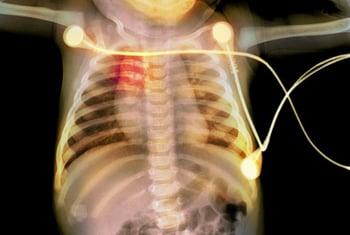
This x-ray shows rib fractures (highlighted in red) in a baby, which are suggestive of child abuse.
Sexual abuse
Often, sexual abuse is diagnosed on the basis of the child's or a witness's account of the incident. However, many children are reluctant to talk about sexual abuse because they may feel ashamed or they may fear harm from the abuser or other consequences if they tell anyone. Abuse may be suspected only because the child's behavior changes. Doctors should suspect sexual abuse if a young child has a sexually transmitted infection.
If doctors suspect a child has been sexually abused, they typically arrange to have the child examined by a Sexual Assault Nurse Examiner, even if they have to transfer the child to another facility. There, the examiner collects legal evidence of possible sexual contact, such as swabs of body fluids and skin surfaces. This collection of evidence is often called a "rape kit." Photographs of any visible injuries are taken. Doctors typically also do tests for sexually transmitted infections and, when appropriate, for pregnancy.
Treatment of Child Neglect and Abuse
Treatment of injuries
Measures to ensure safety of the child, including reporting to an appropriate agency and sometimes removal from the home
Physical injuries and disorders are treated as needed. Some children are hospitalized for treatment of injuries, severe undernutrition, or other disorders. Some severe injuries require surgery. Infants who may have abusive head trauma are usually admitted to the hospital. Sometimes healthy children are hospitalized to protect them from further abuse until a safe disposition is determined. Physical abuse, particularly head trauma, can have long-lasting effects on development. All children with head trauma should be evaluated because they may need early intervention services, such as speech and language therapy and occupational therapy.
Some children who have been sexually abused are given medications to prevent sexually transmitted infections, sometimes including HIV infection. Children who are suspected of being abused need immediate support. Children who are sexually abused, even those who appear unaffected initially, are referred to a mental health care practitioner because future problems are common. Long-term psychological counseling is often needed. Doctors refer children with other types of abuse for counseling if behavioral or emotional problems develop.
Immediate safety of the child
Mandated reporters are people who are required by law to promptly report cases of suspected child neglect or abuse to a regionally appropriate child protective services organization. Many different people, not just doctors and health care professionals, who have contact with children in the course of their work or volunteer activities are considered mandated reporters. Such people include teachers, child care workers, foster care providers, and police and legal services personnel. Health care practitioners should, but are not required to, tell parents that a report is being made according to the law and that they may be contacted, interviewed, and visited at their home. Depending on the circumstances, the local law enforcement agency may also be notified.
People who are not mandated reporters but who know of or suspect neglect or abuse also are encouraged to report it but are not required by law to do so. Any person who makes a report of abuse based on reasonable cause and in good faith cannot be arrested or sued for their action. People can report abuse or get help by contacting the National Child Abuse Hotline at 1-800-4-A-CHILD (1-800-422-4453).
Reported cases of child abuse are screened for the need for further investigation. Reported cases that require further investigation are investigated by representatives of the local child protective services agency, who attempt to determine the facts and make recommendations. Agency representatives may recommend social services (for the child and family members), temporary hospitalization for protection or for nutritional support if needed, temporary placement with relatives, or temporary foster care. Doctors decide what to do based on the immediate medical needs of the child, which is partially dependent on the severity of the injuries. Social workers often assist these doctors. Representatives from the child protective services agency determine the safety plan or disposition of the child.
Follow-up care
A team of doctors, other health care practitioners, and social workers attempts to address the causes and effects of neglect and abuse. This team works together with the legal system to coordinate care for the child. The team helps family members understand the child's needs and helps them access local resources. For example, a child whose parents cannot afford health care may qualify for medical assistance from the state. Other community and government programs can provide assistance with food and shelter. Parents with substance use disorders or mental health problems may be directed to appropriate treatment programs.
Parenting programs and support groups are available in some areas. Periodic or ongoing contact by a social worker, a victim's advocate, or both may be needed for the family.
Removal from the home
The ultimate goal of child protective services is to return children to a safe, healthy family environment. Depending on the nature of the abuse and other factors, children may go home with their family members or may be removed from their home and placed with relatives or in foster care situations where caretakers are capable of protecting the child from further abuse. This placement is often temporary, for example, until the parents obtain housing or employment or until regular home visits by a social worker are established. Unfortunately, recurrences of neglect and/or abuse are common.
In severe cases of neglect or abuse, long-term removal may be considered or the parents' rights may be permanently terminated. In such cases, the child remains in foster care until the child is adopted or becomes an adult.
Prevention of Child Neglect and Abuse
The best way to prevent child abuse and neglect is to stop it before it starts. Programs that provide support for parents and teach positive parenting skills are very important and necessary. Parents can learn how to communicate positively, discipline appropriately, and respond to their children’s physical and emotional needs. Programs to prevent child abuse and neglect also help improve parent-child relationships and provide parents with social support.
These support programs for parents may be held in parents’ homes, in schools, in medical or mental health clinics, or in other community-based settings. Programs may involve one-on-one or group sessions.
More Information
The following English-language resources may be useful. Please note that The Manual is not responsible for the content of these resources.